
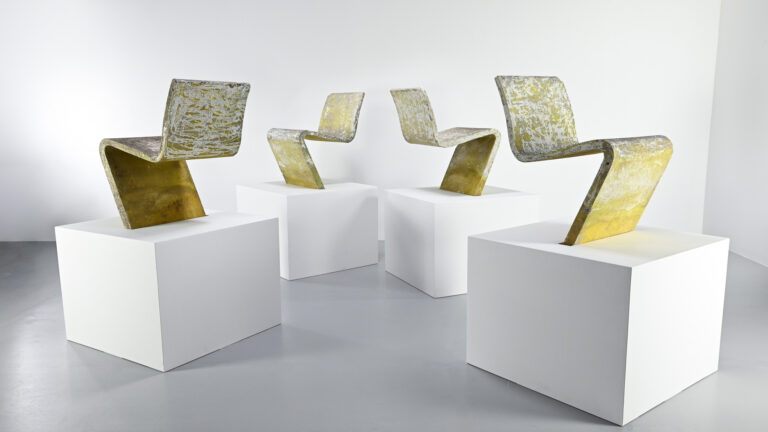
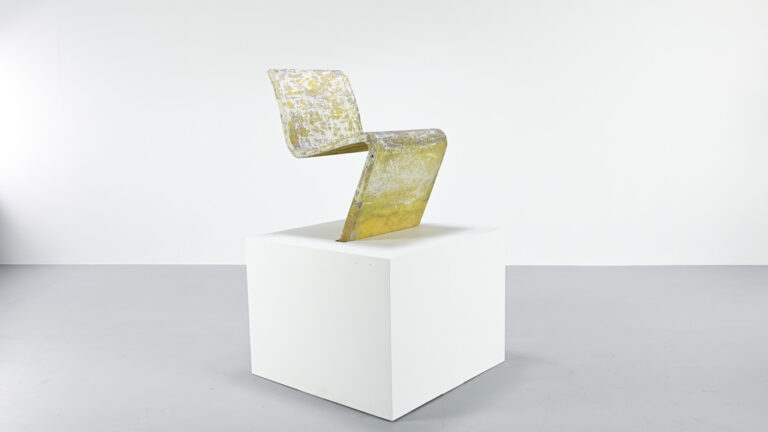
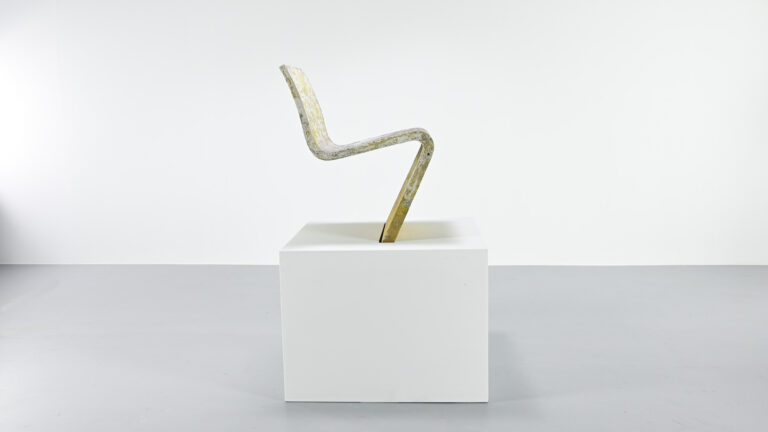
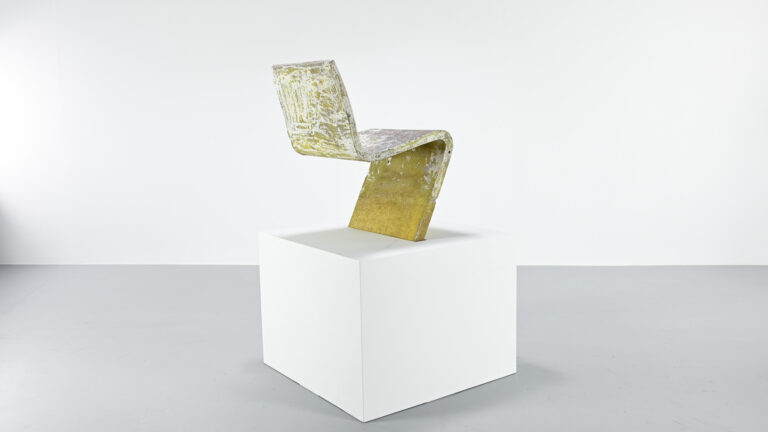
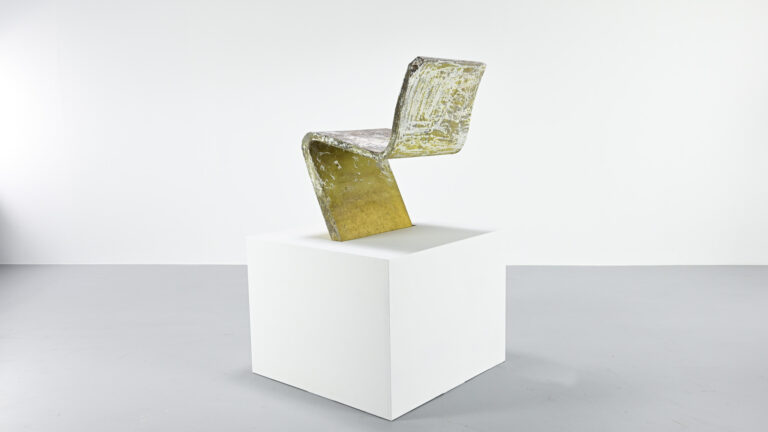
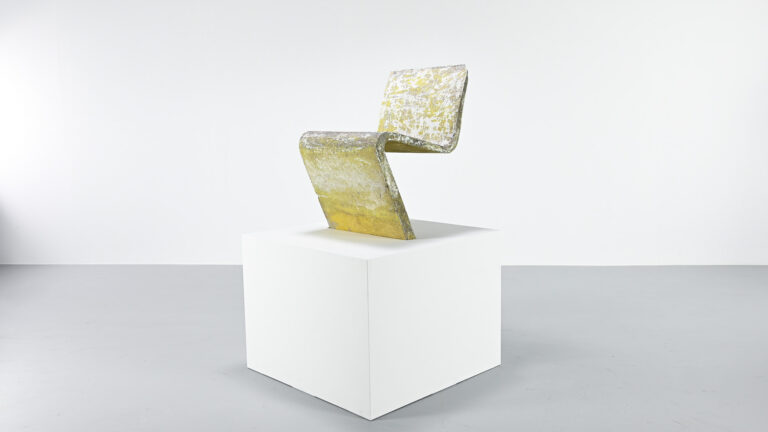
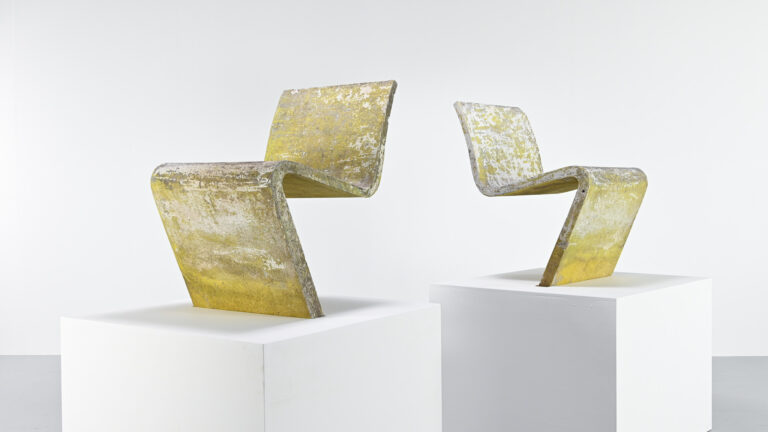
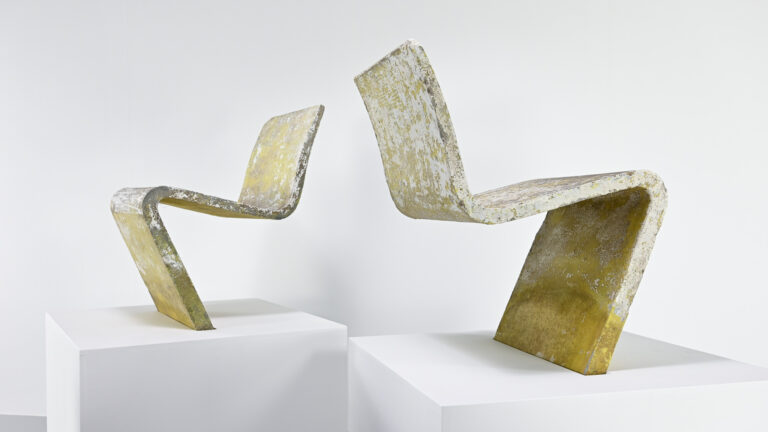
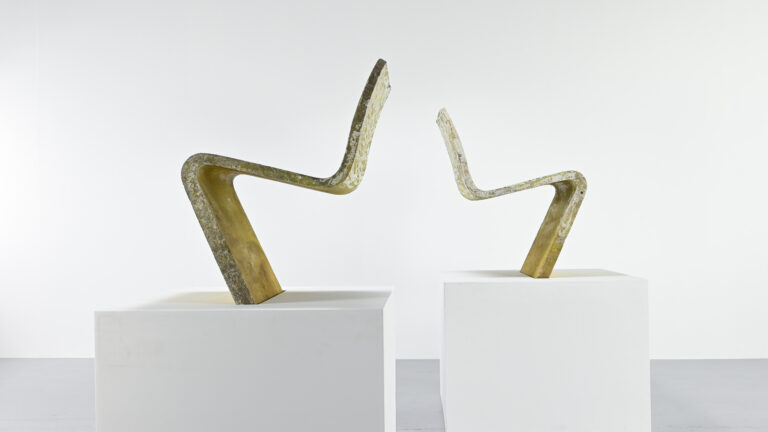
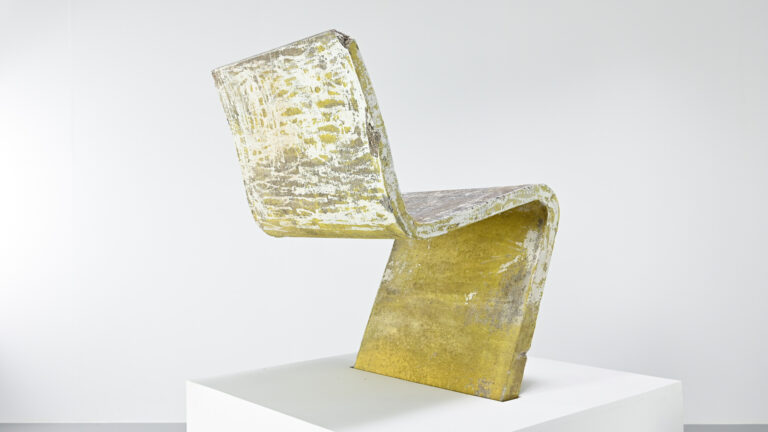
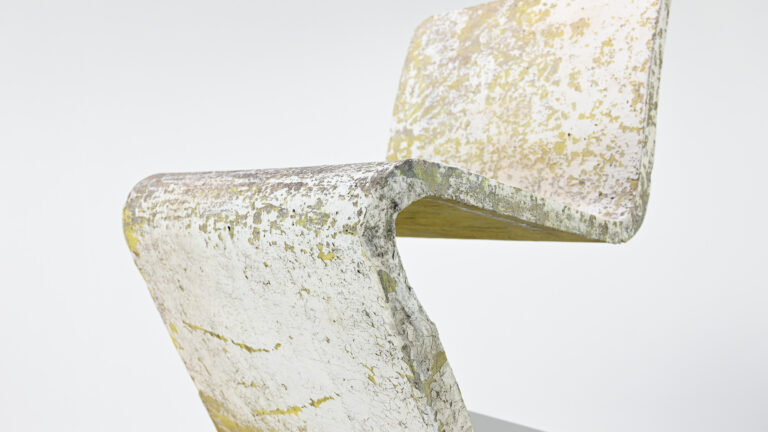
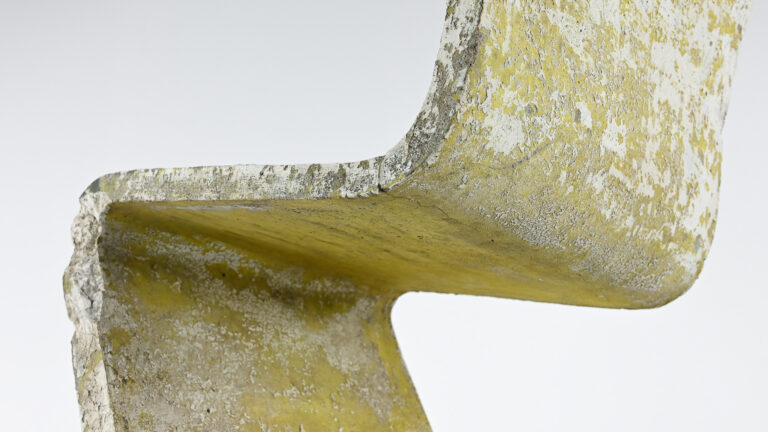
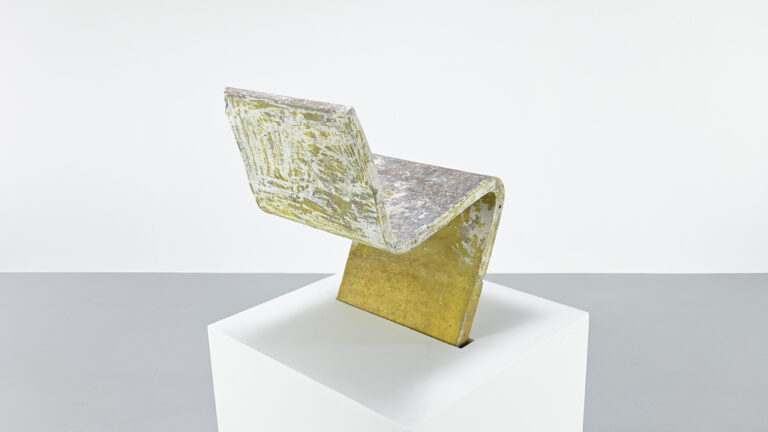
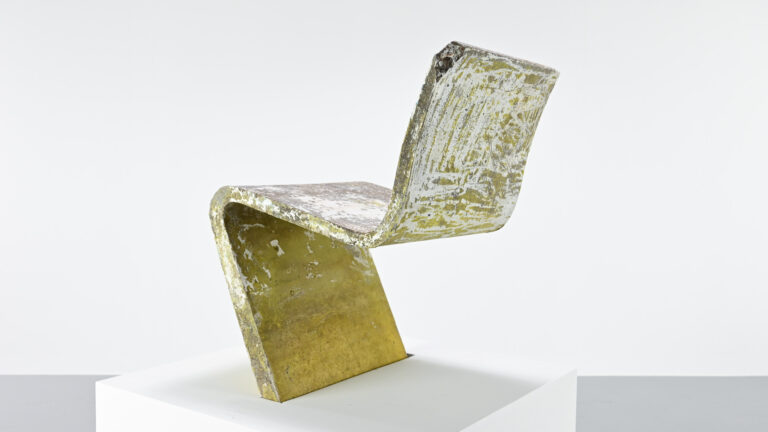
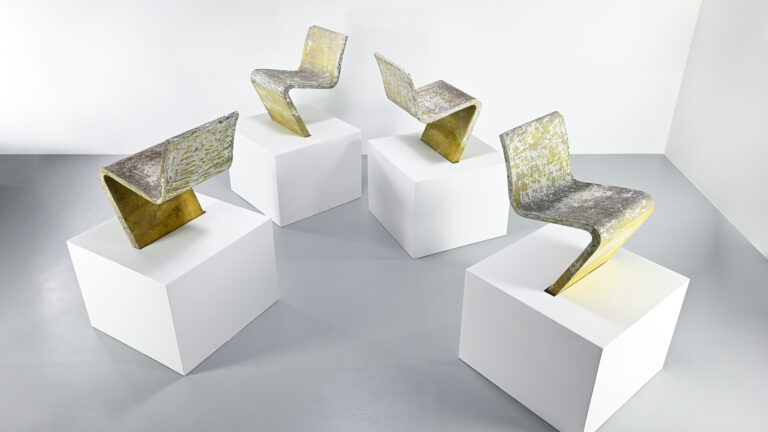
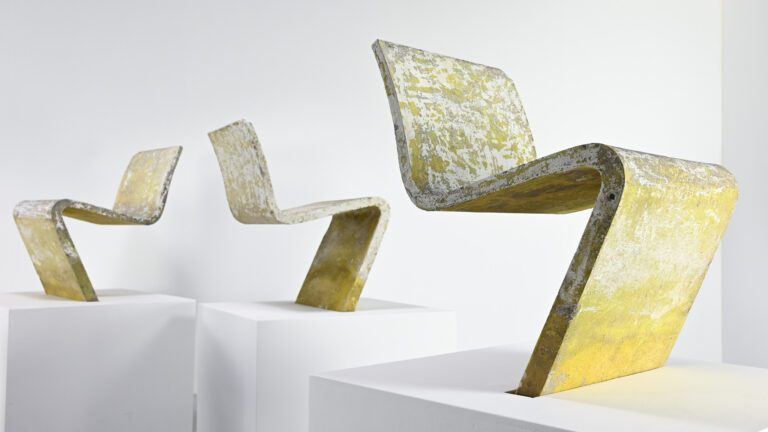
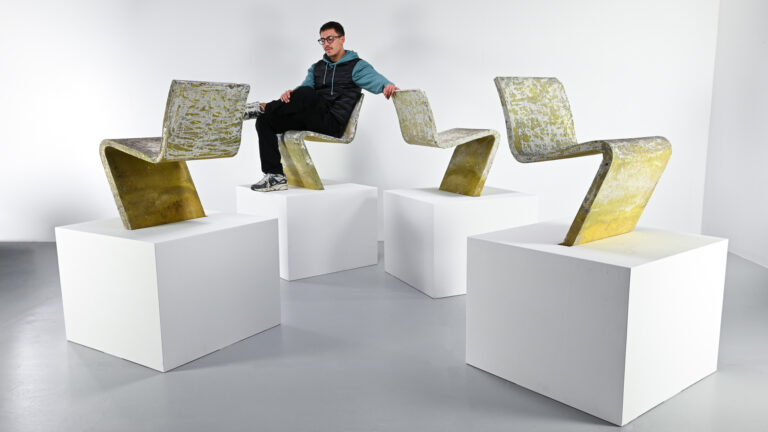
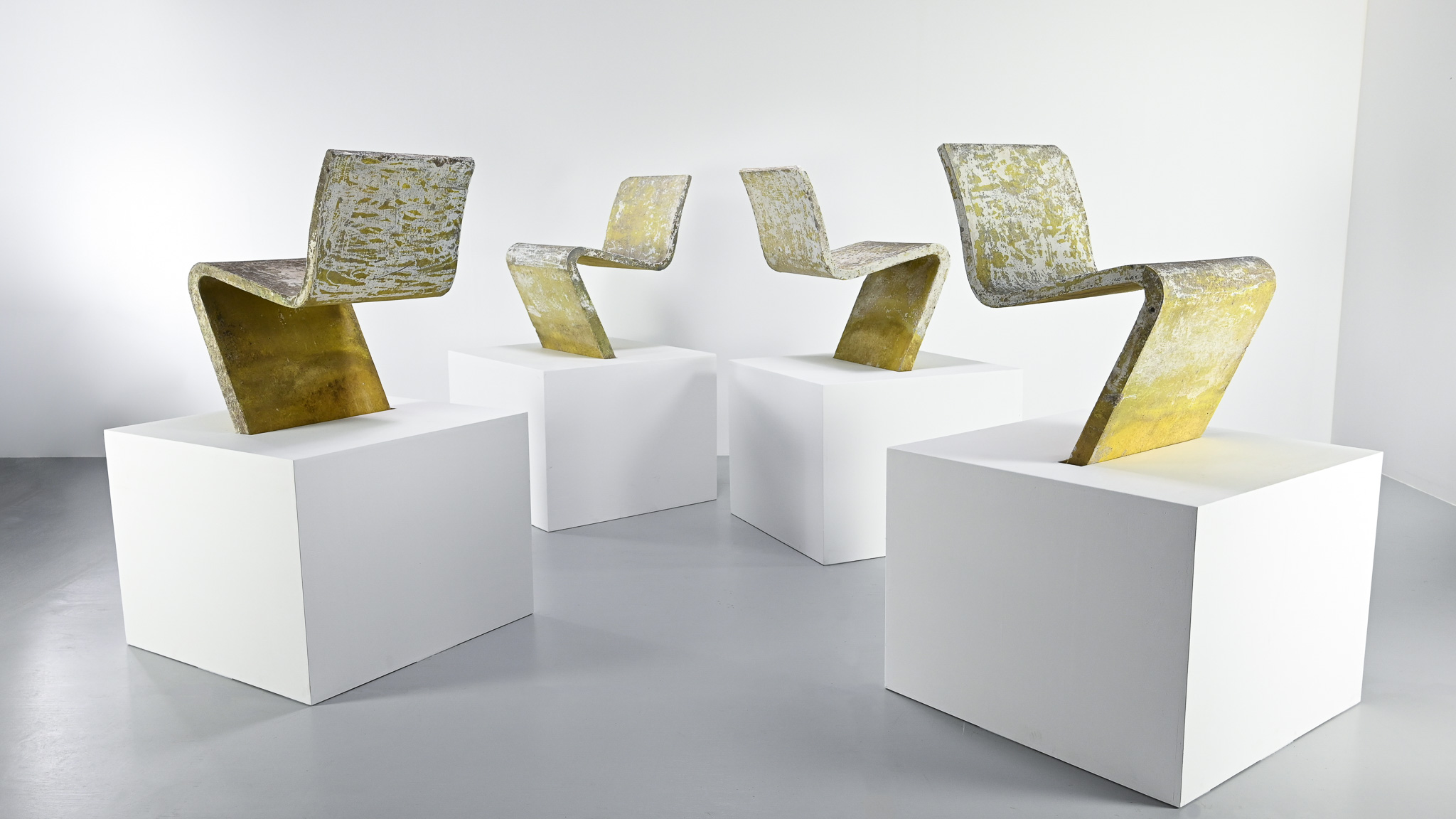
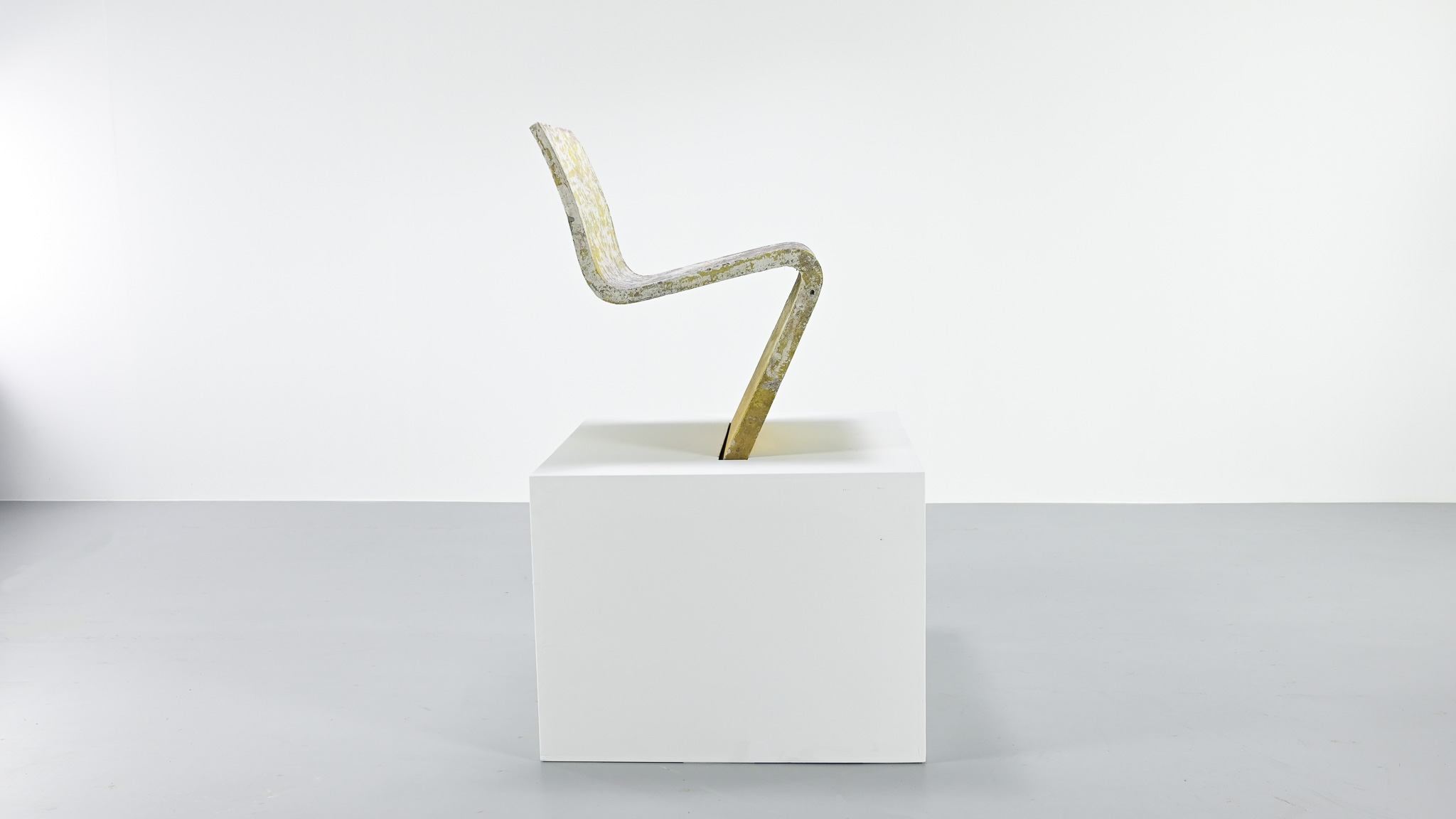
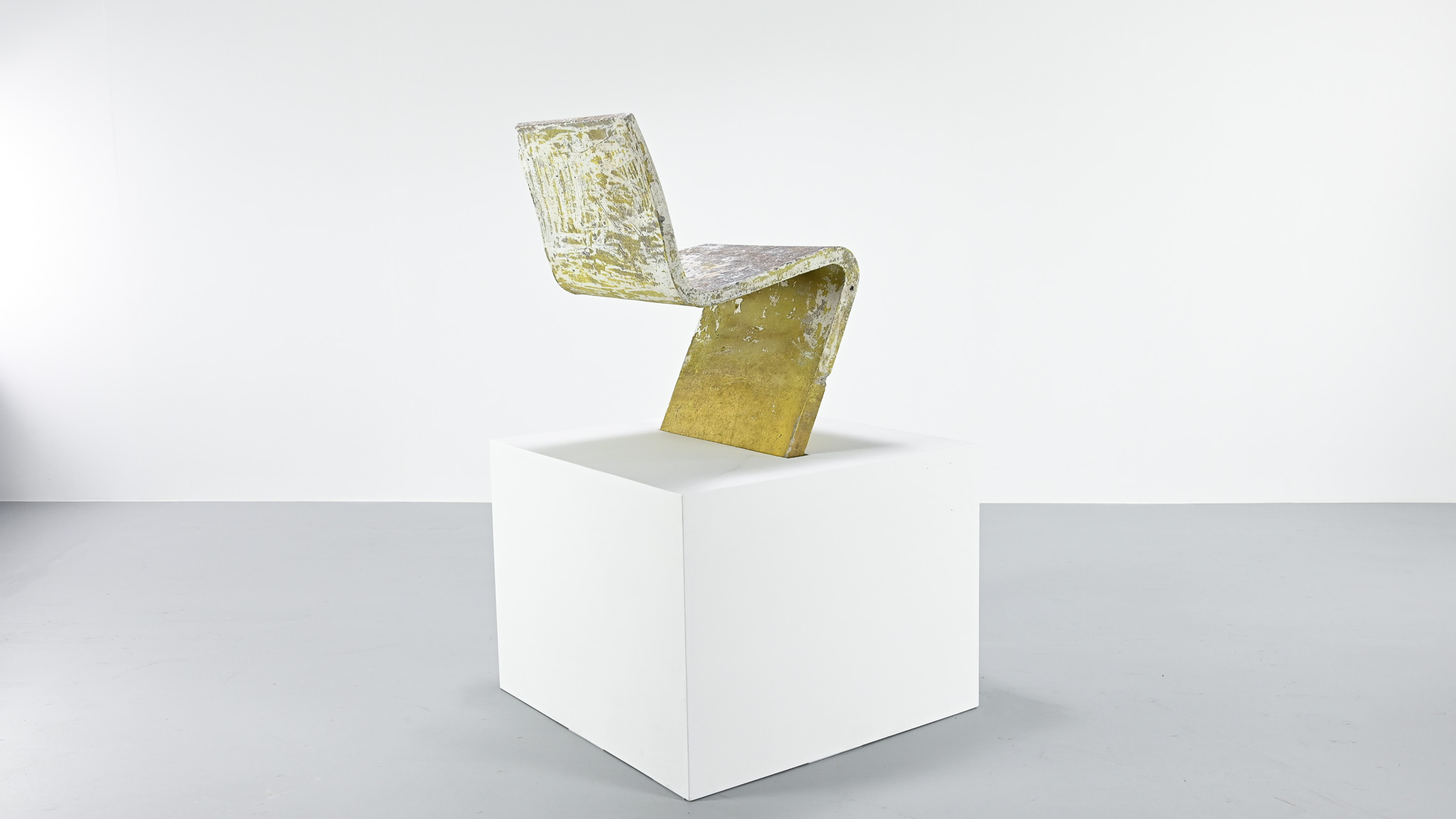
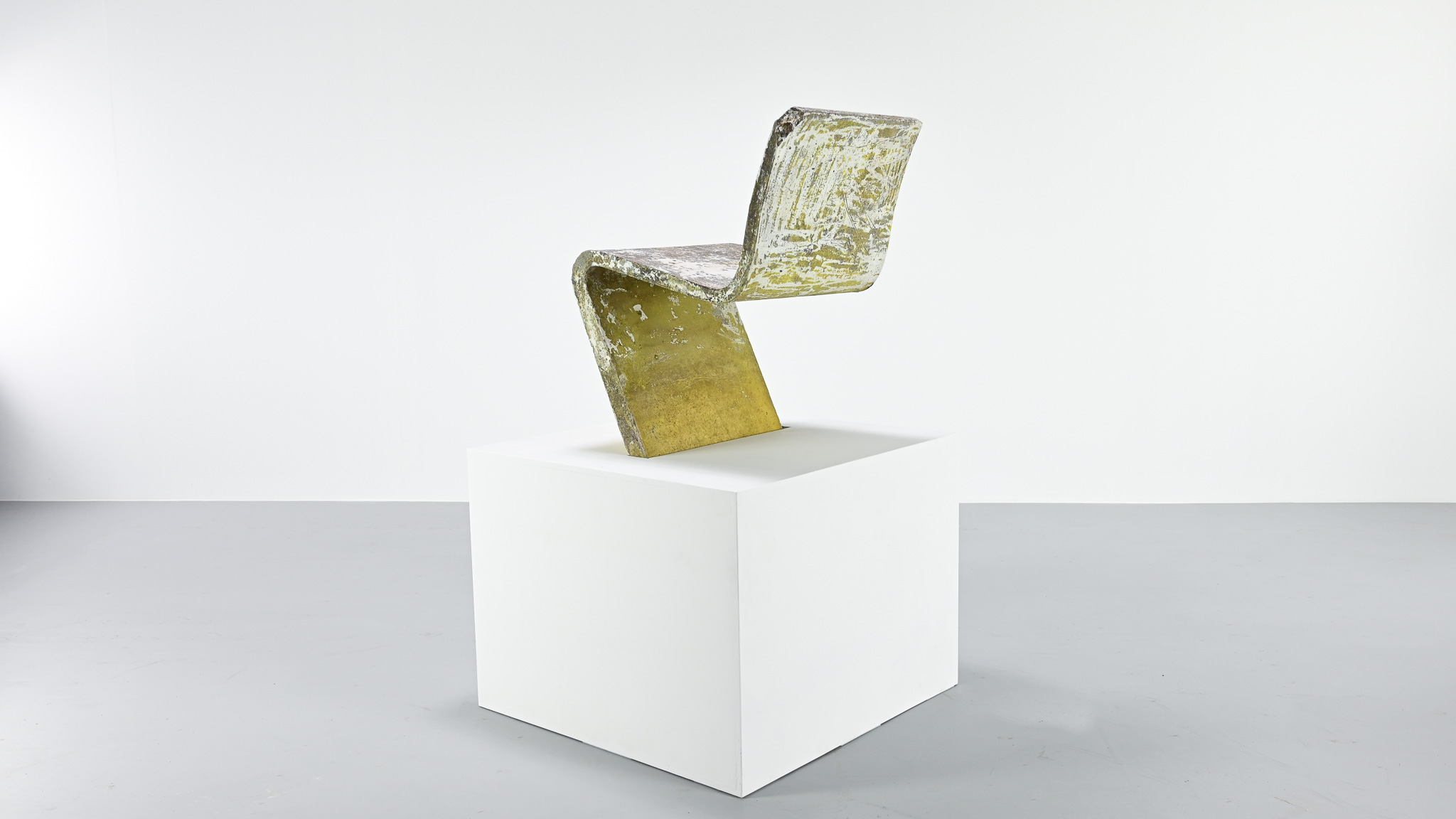
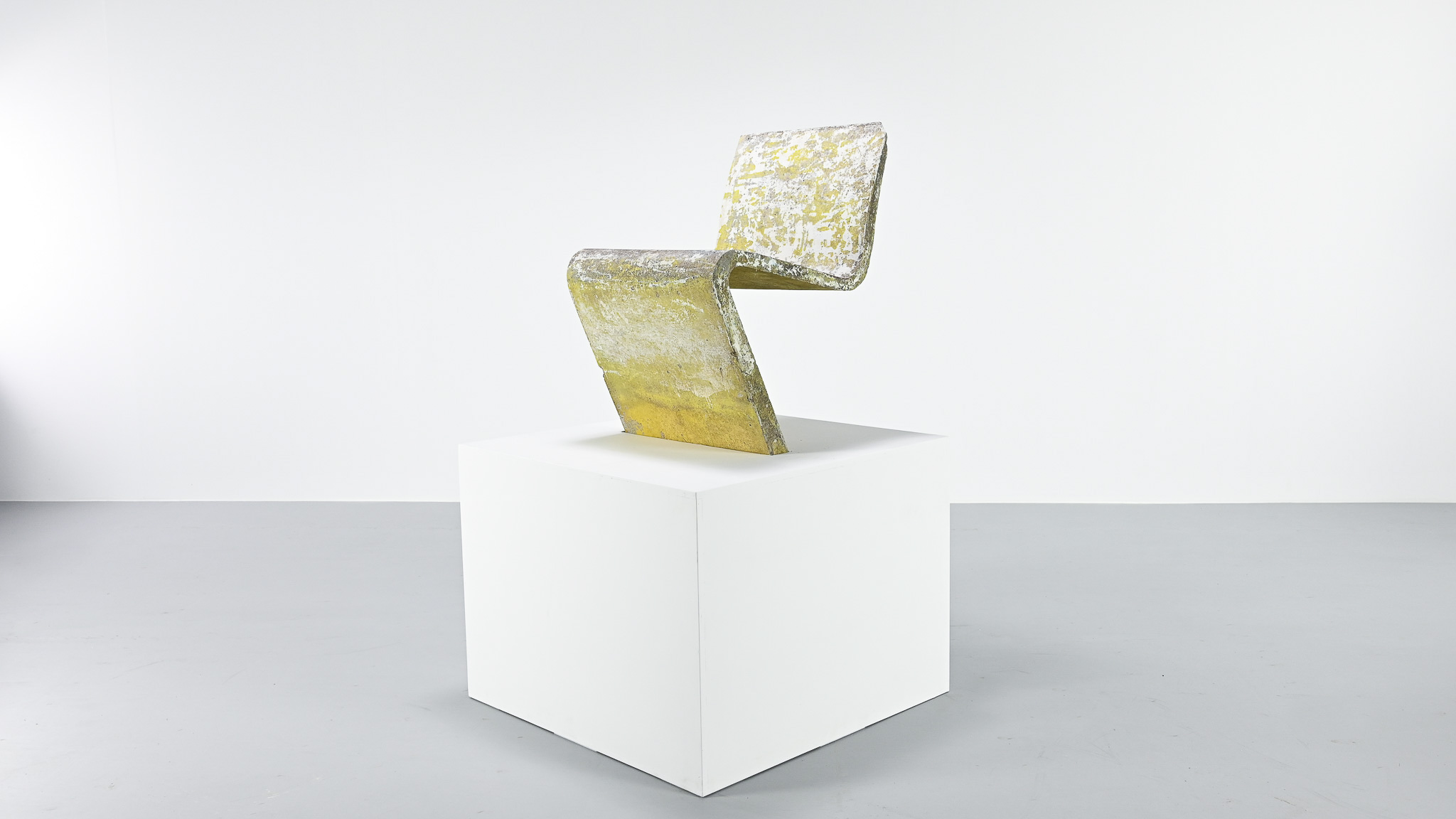
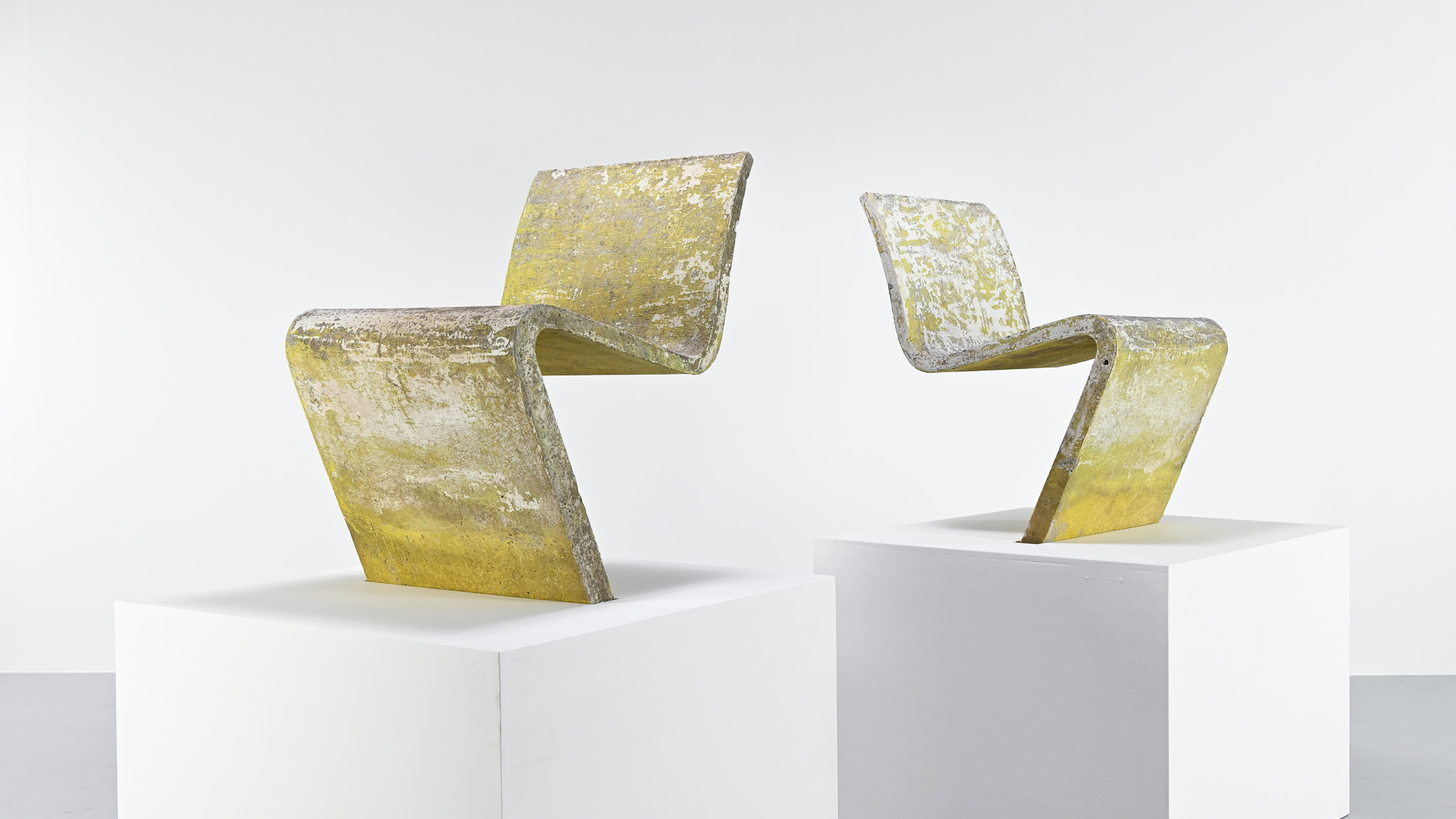
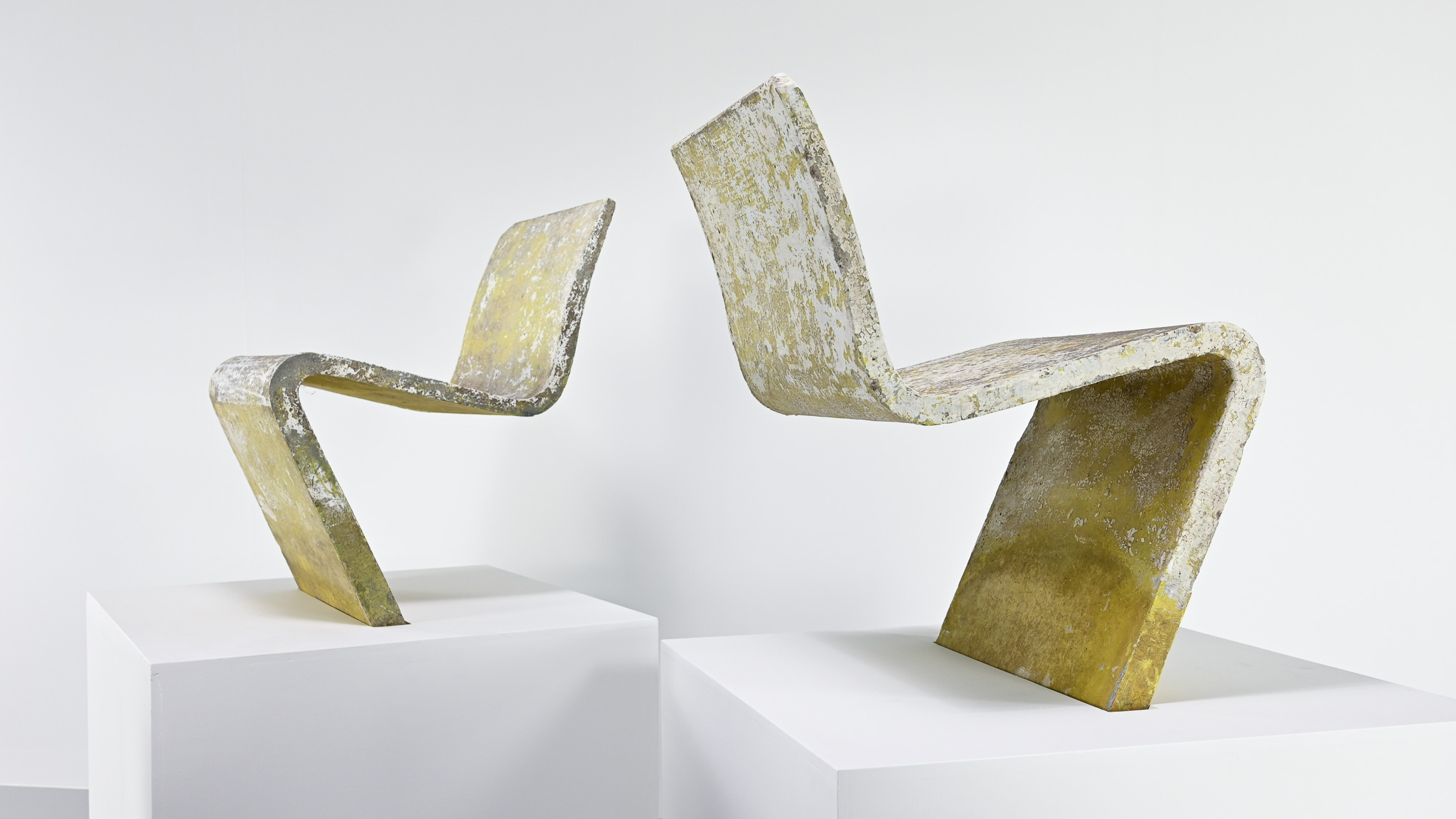
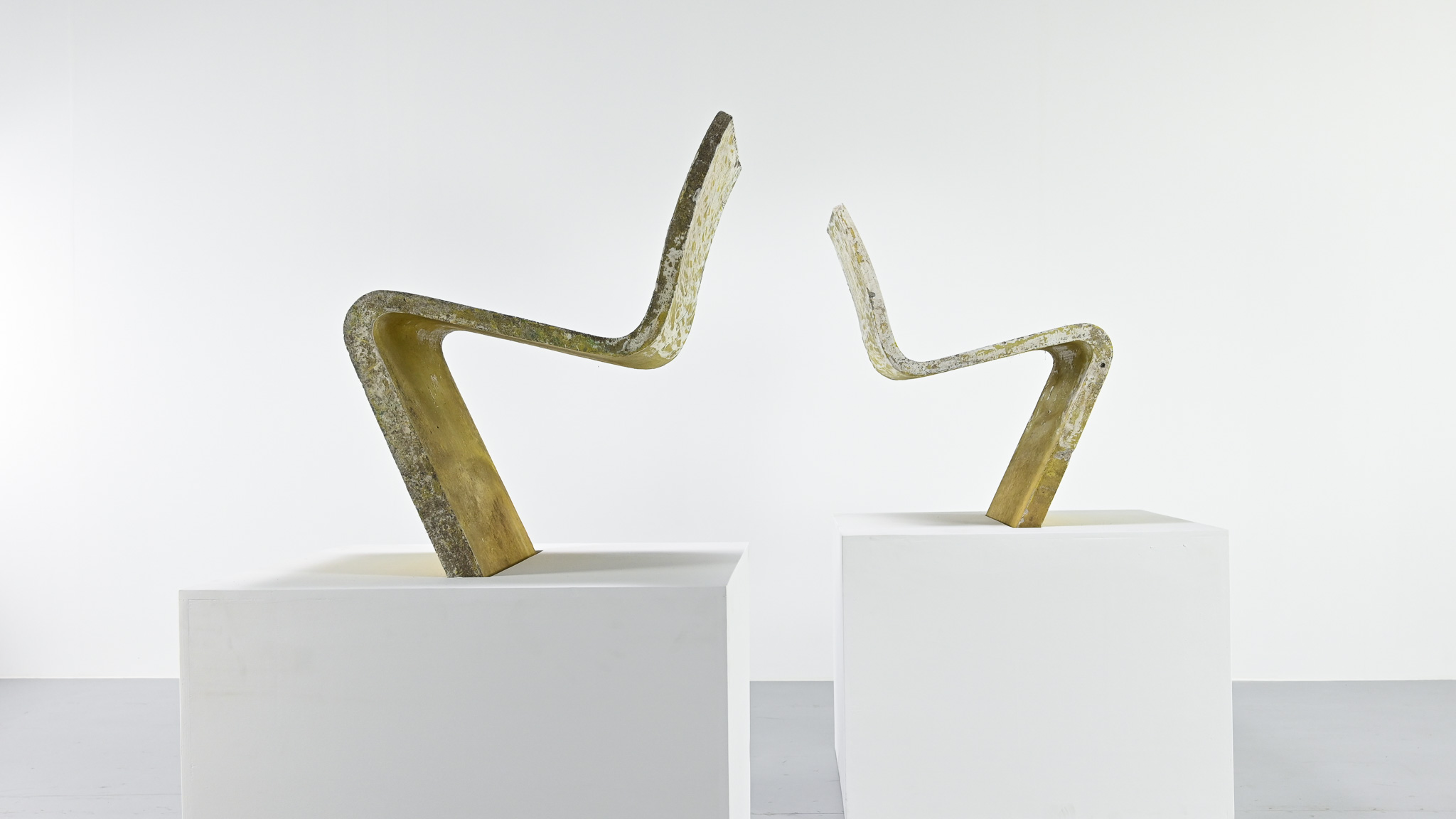
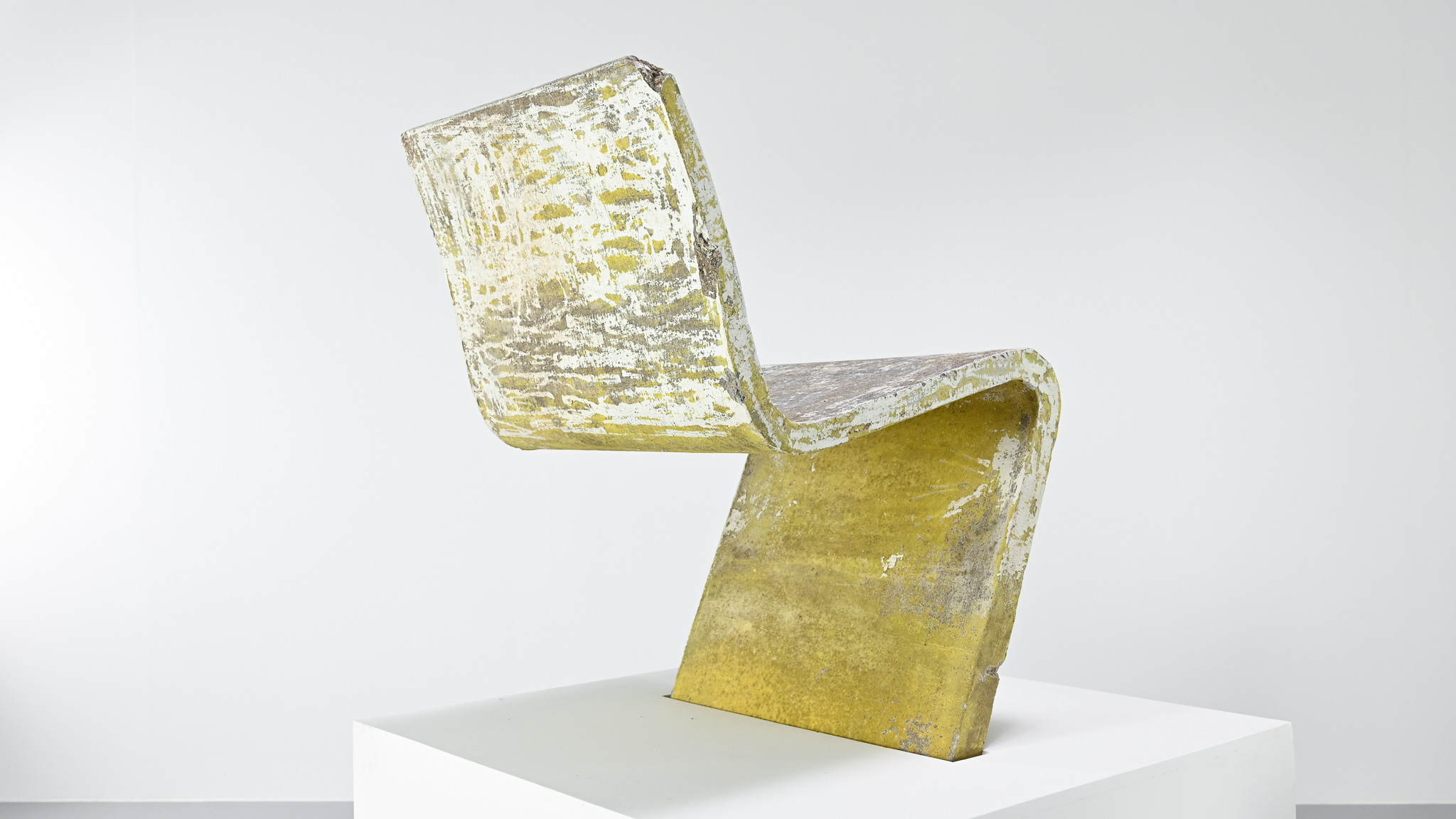
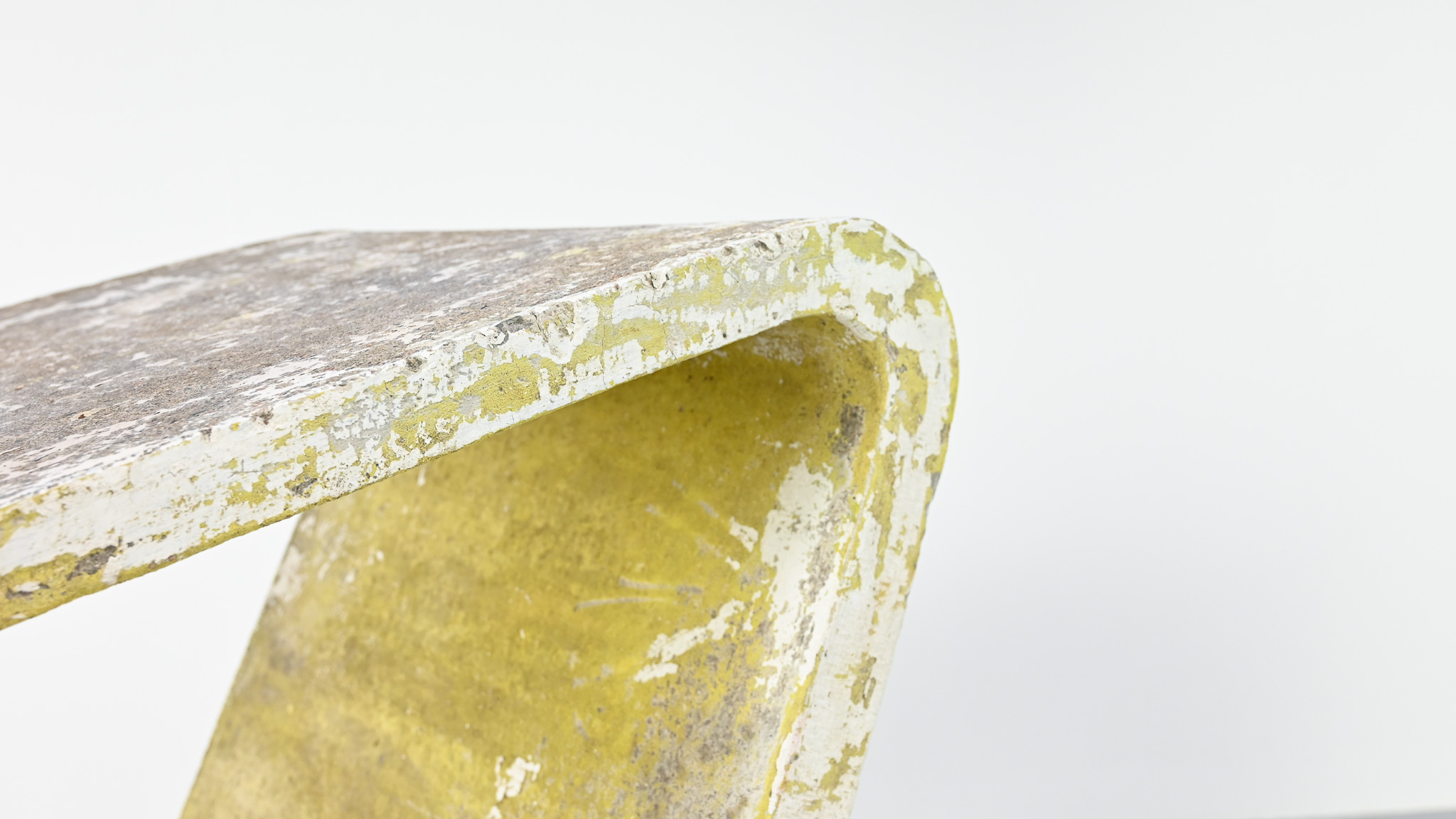
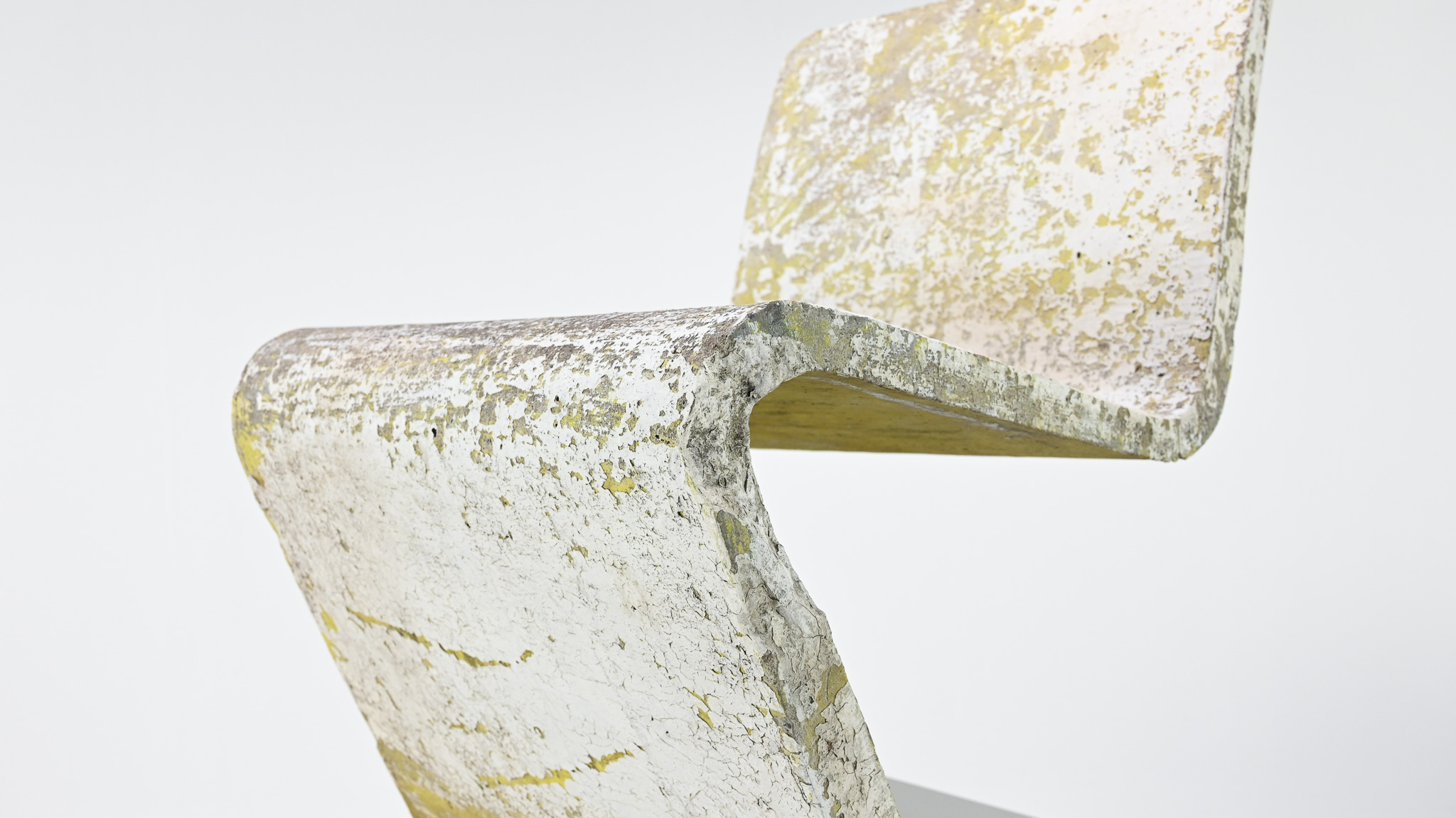
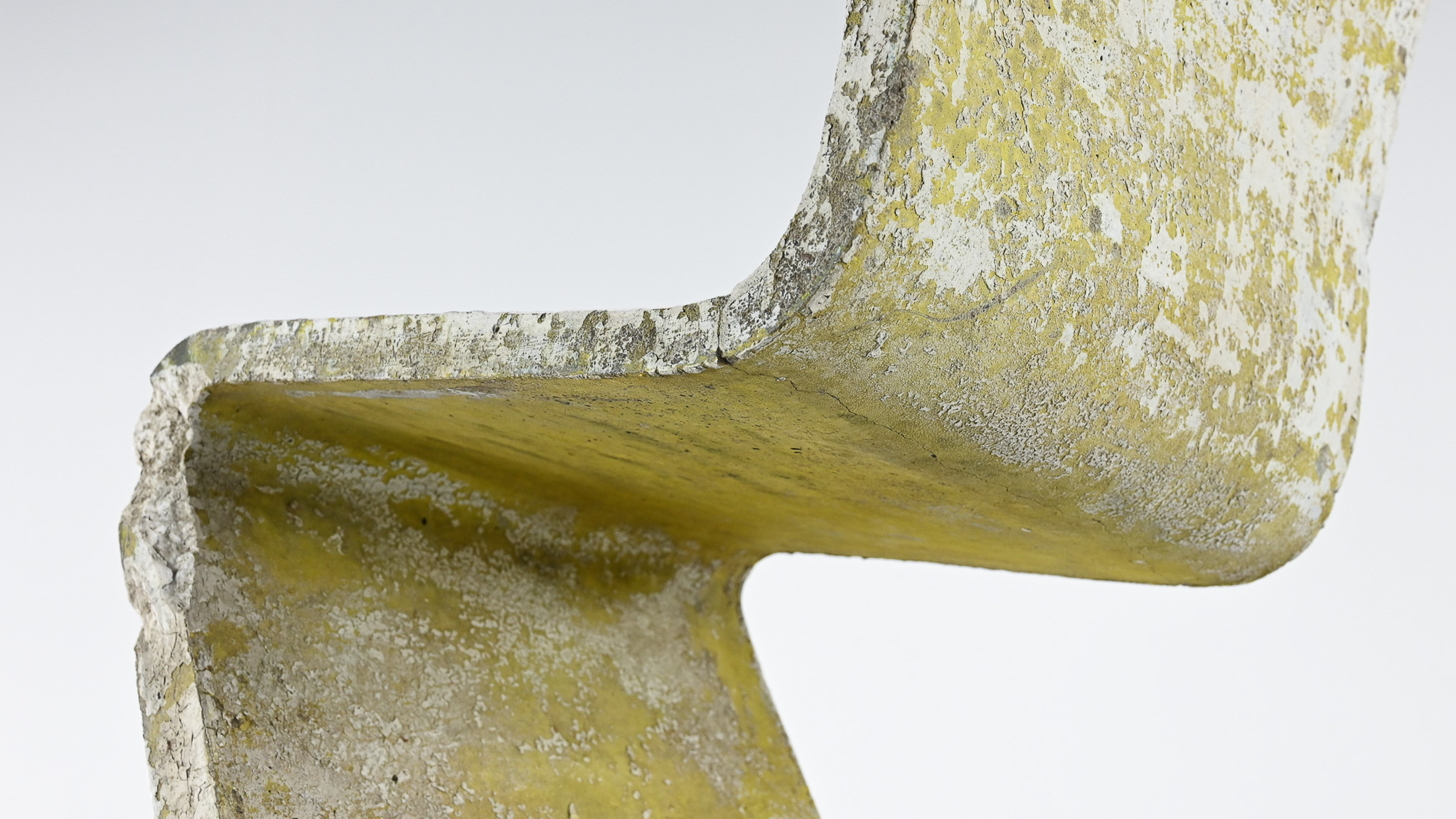
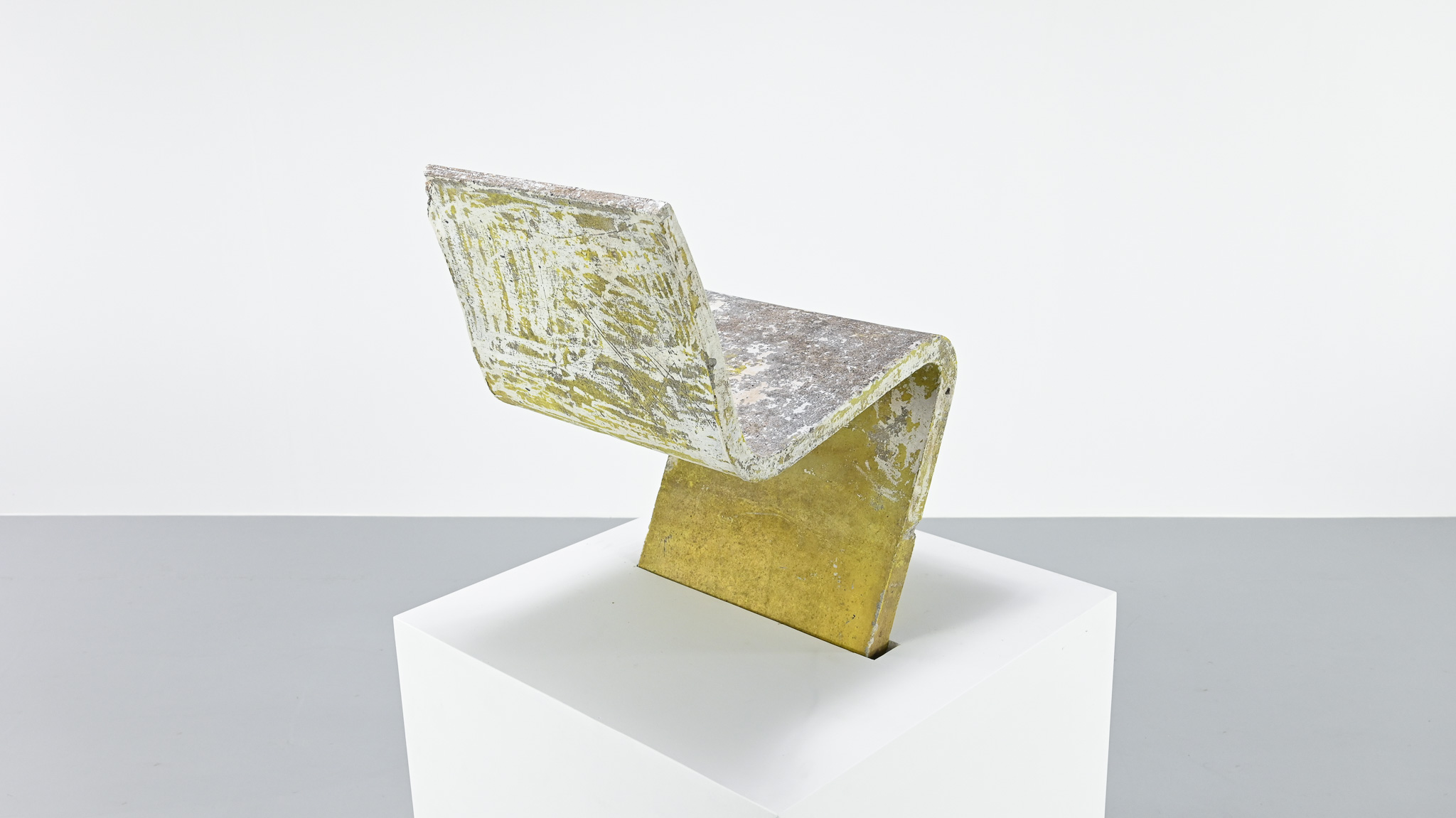
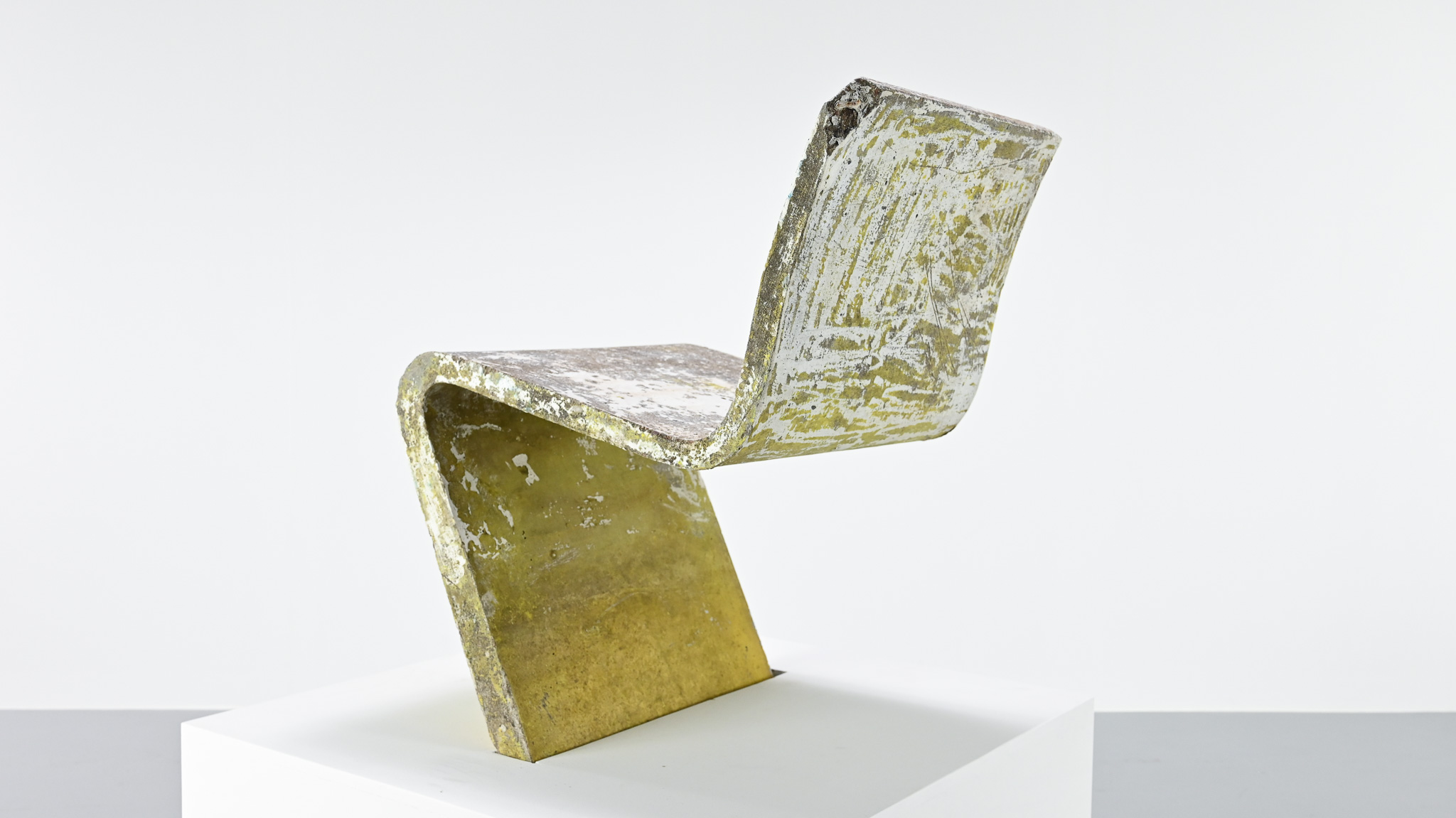
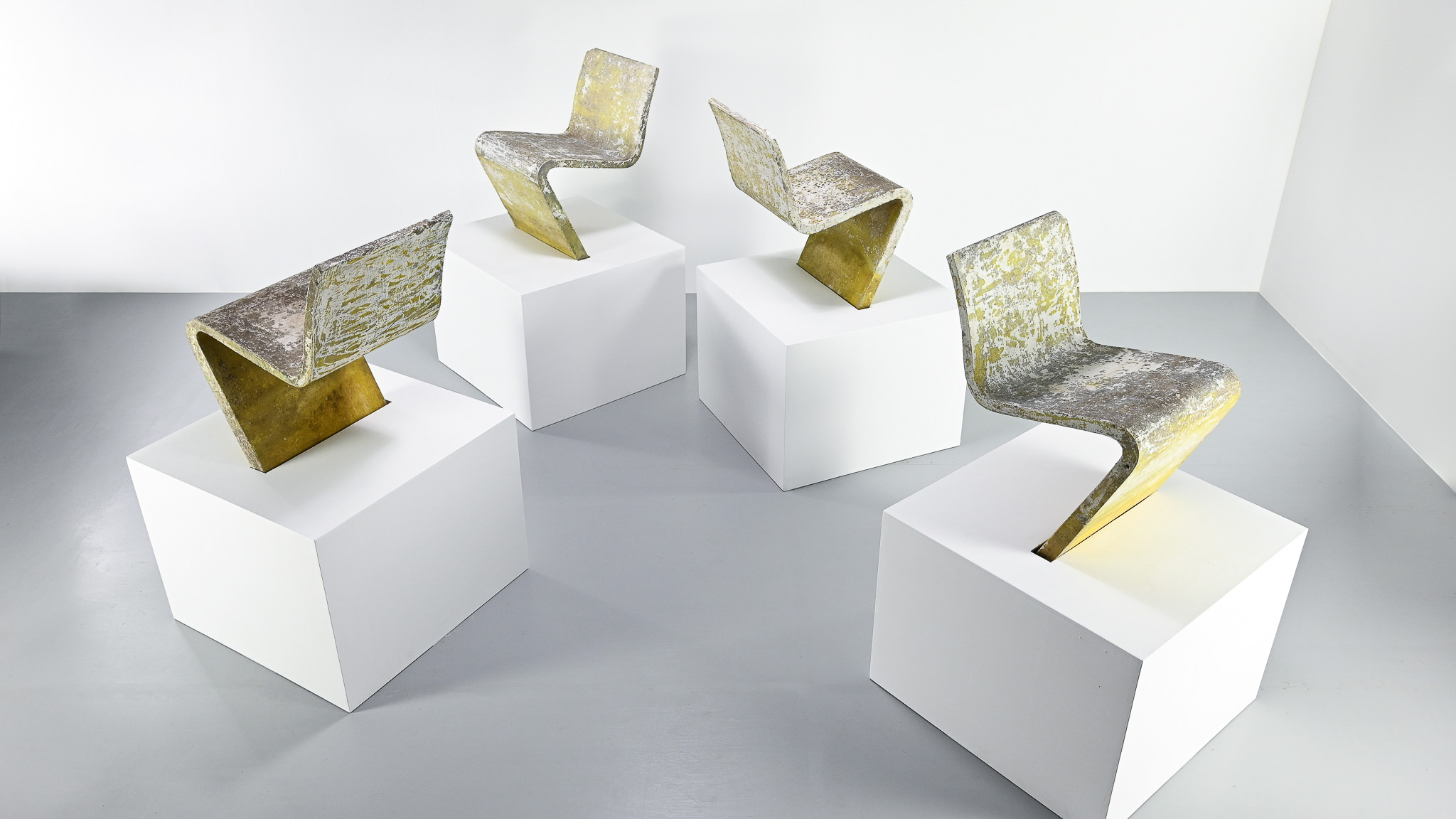
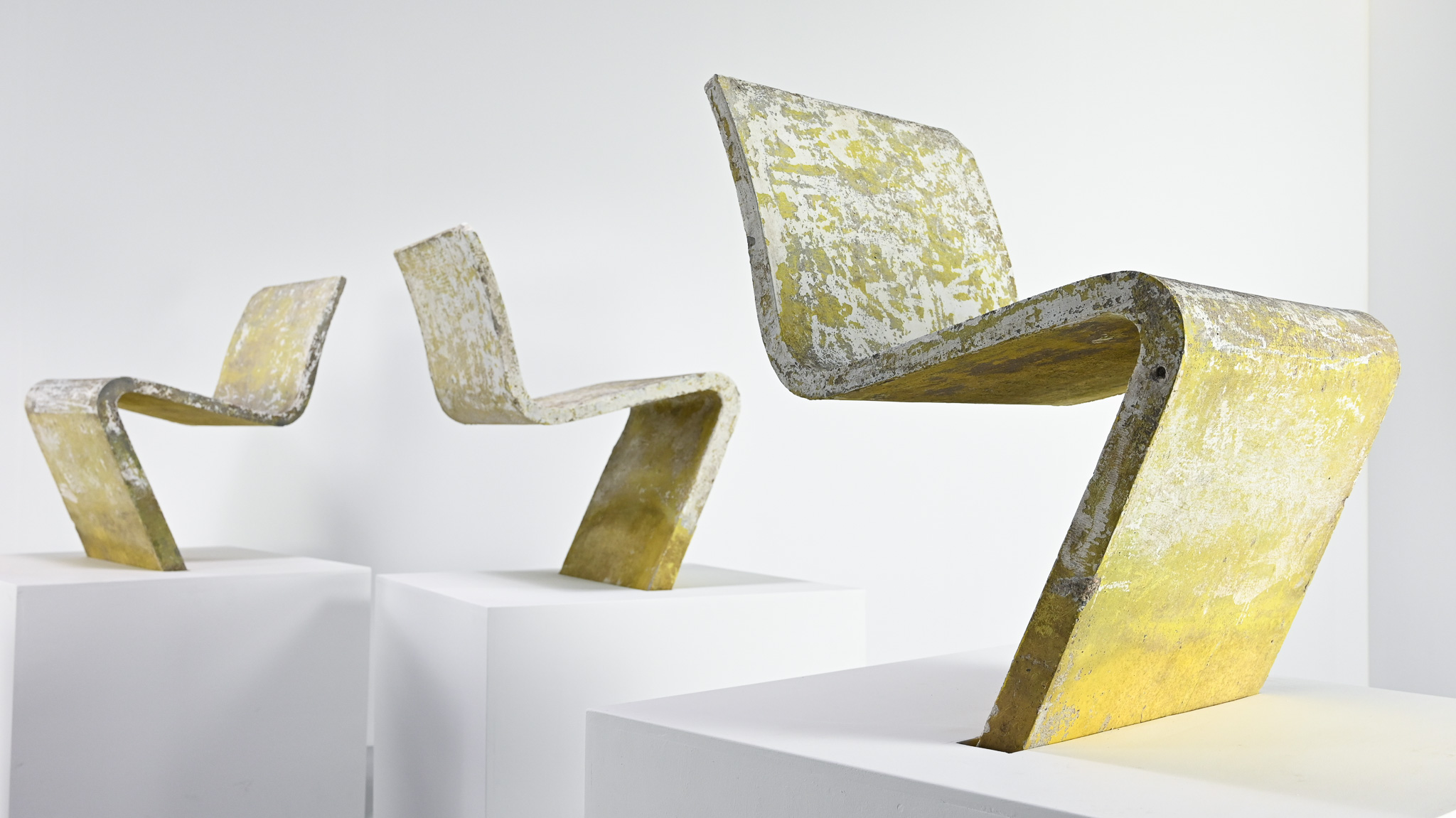
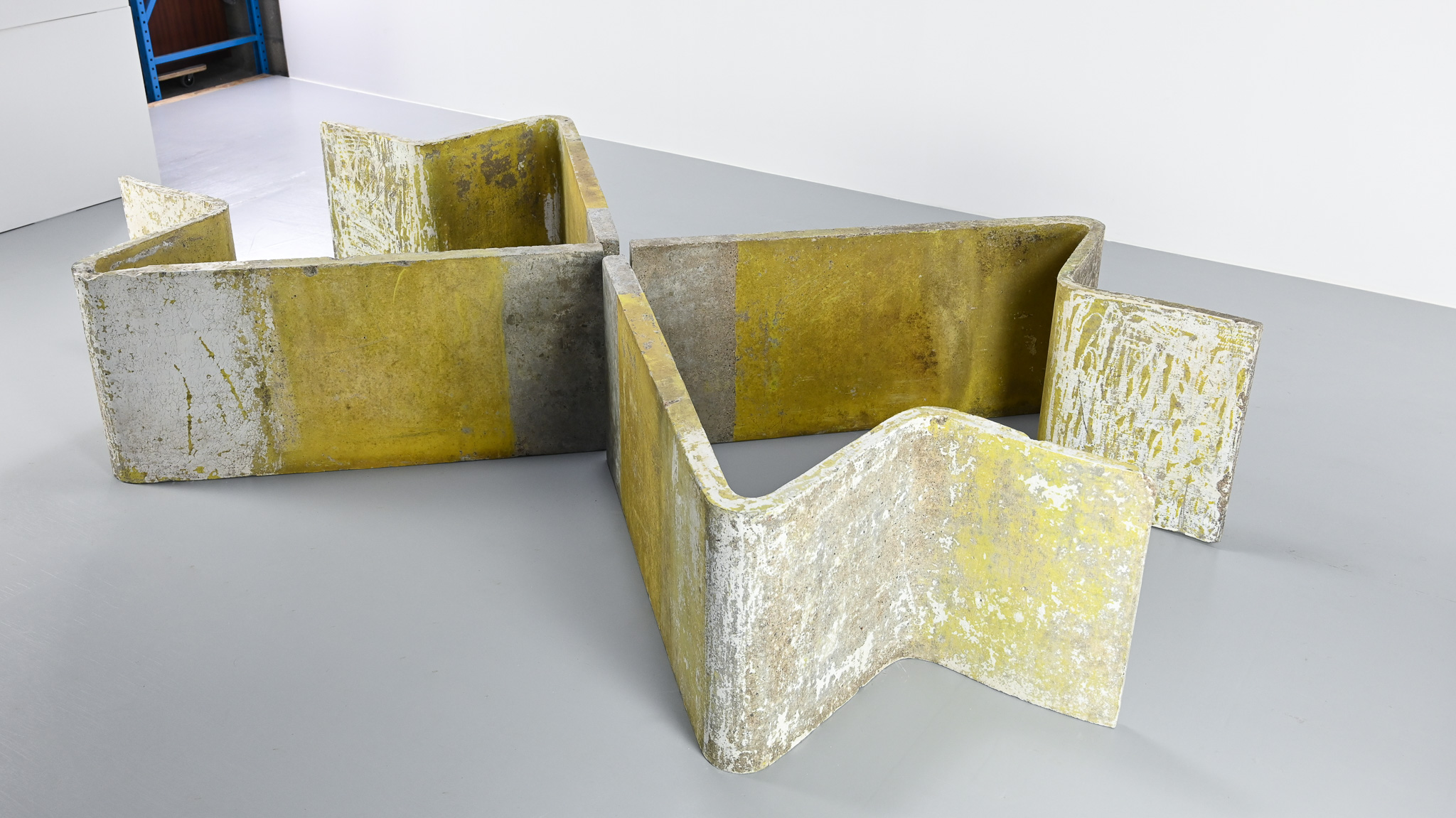
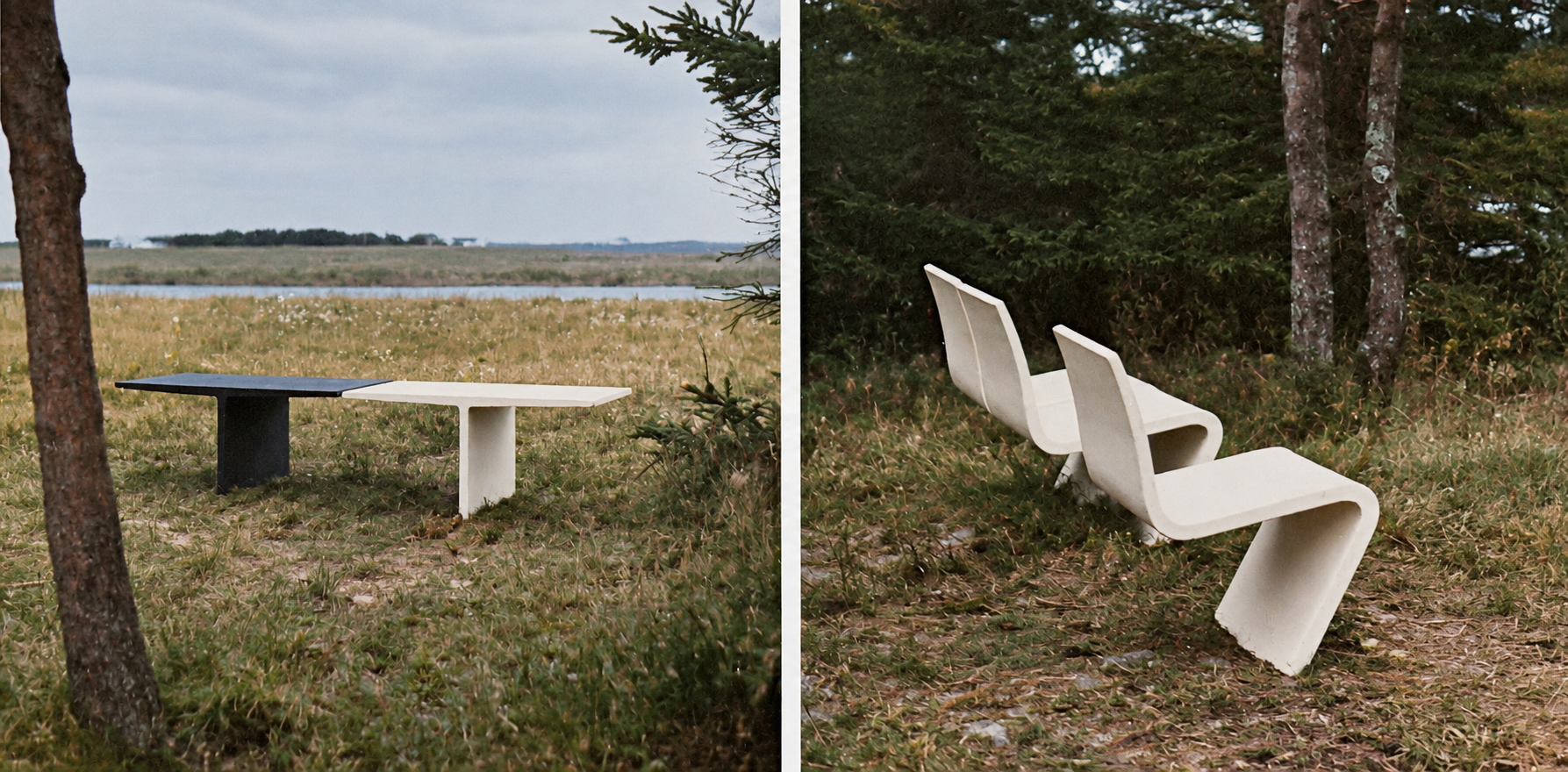
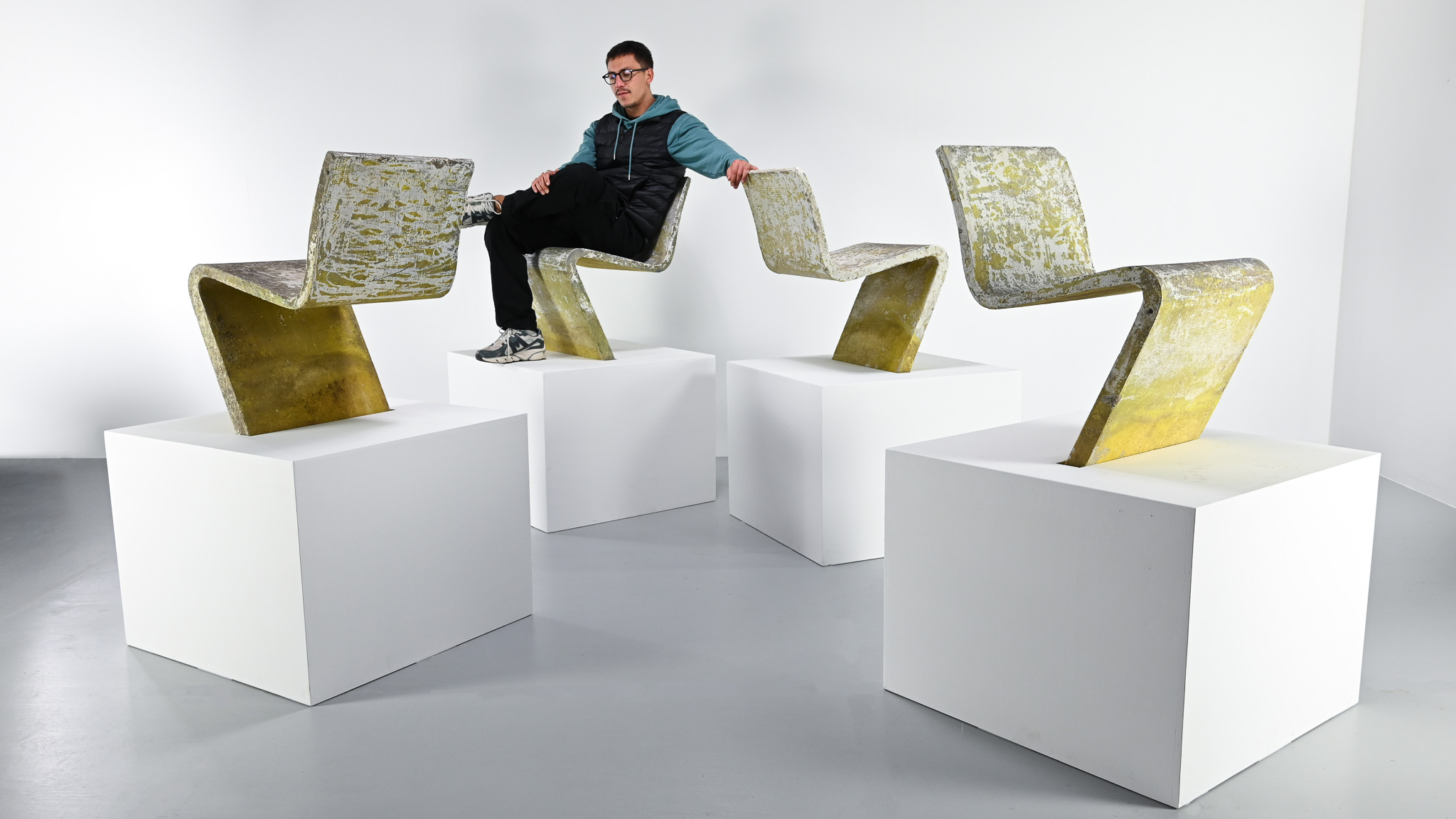
An exceptional suite of four reinforced concrete chairs designed by Poul Kjærholm and produced by Fritz Halvorsens Betonvarefabrik.
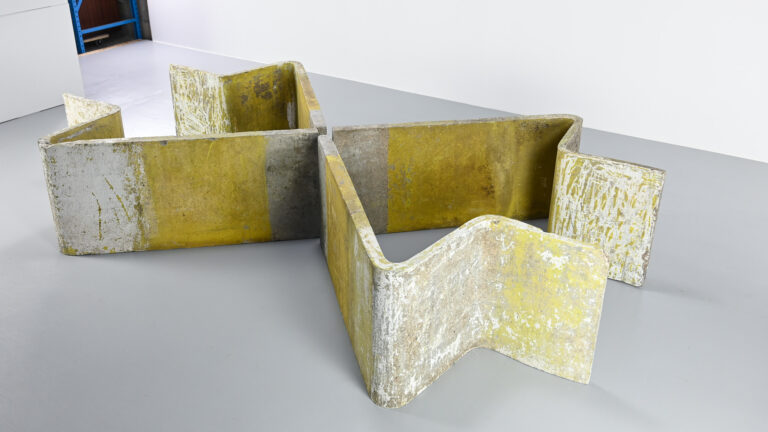
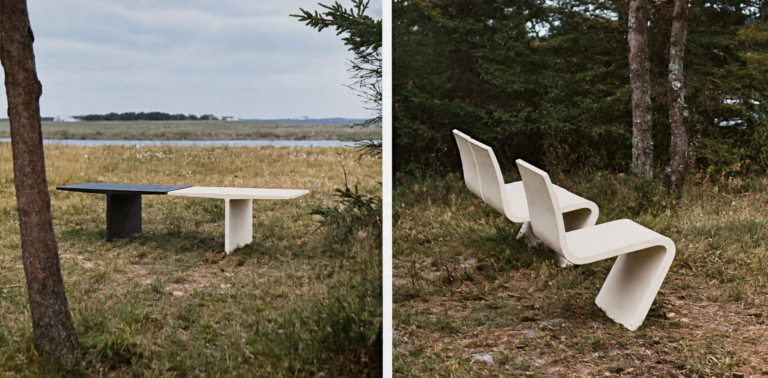
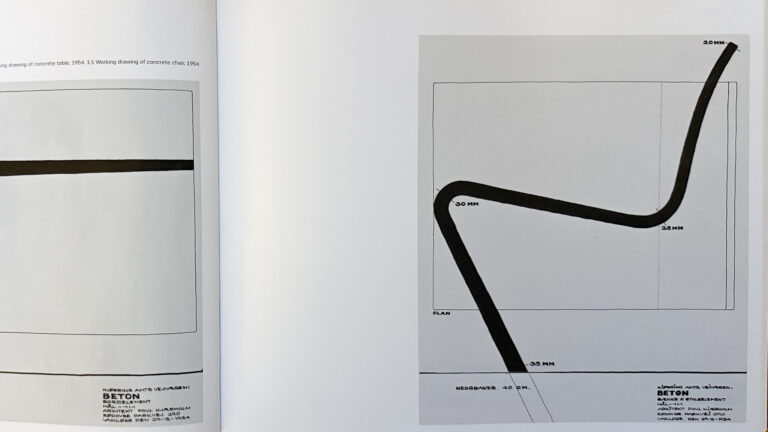
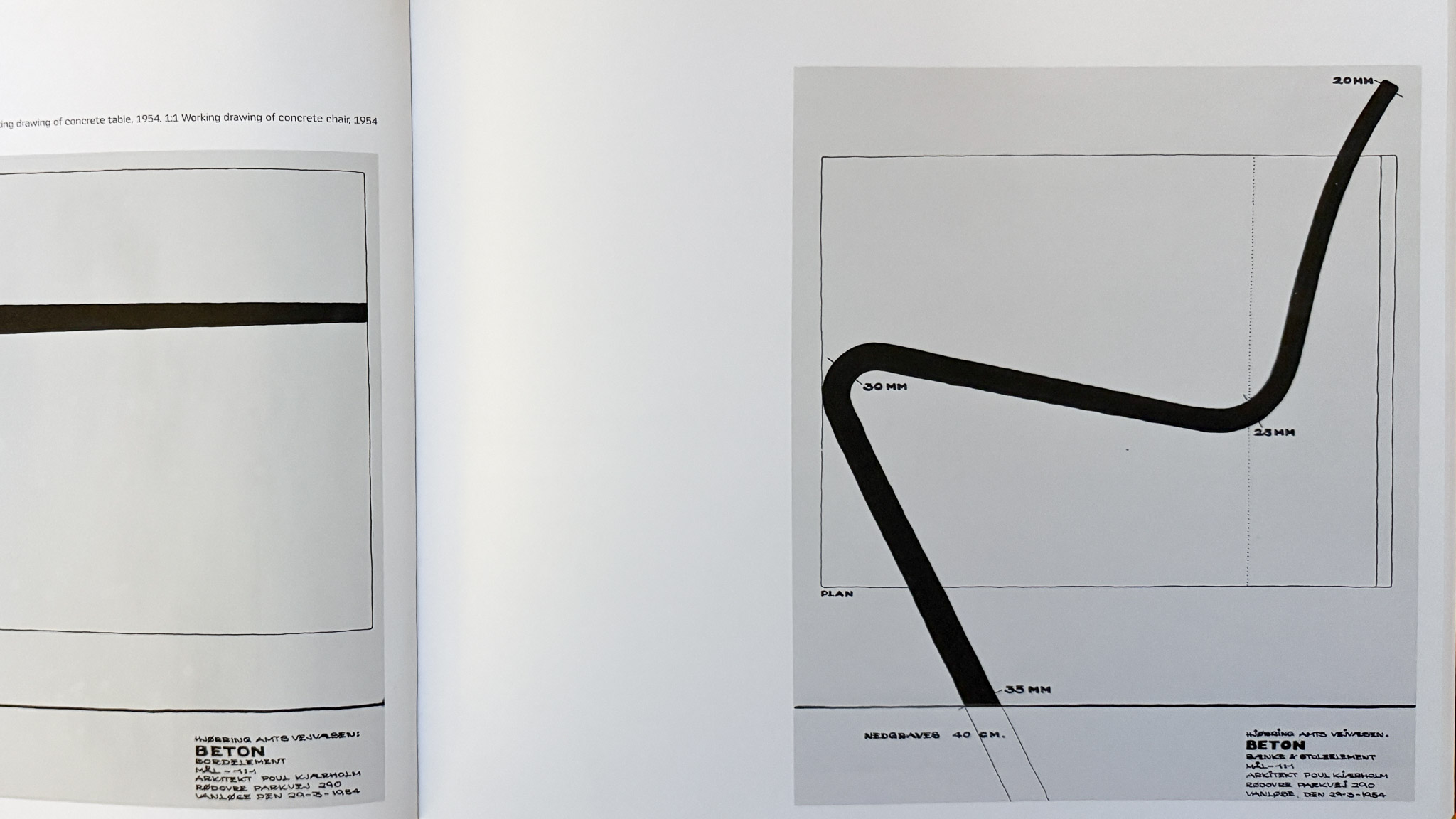
Developed in 1954, the model formed part of Kjærholm’s early exploration of single-material construction. Drawing on Gerrit Rietveld’s Zig Zag Chair, he extended this structural logic into cast concrete, creating a modular system of “Beton Elementer” composed of chairs and tables.
The project was commissioned by Niels Lauritz Dam, county surveyor in northwestern Denmark. Kjærholm was tasked with designing furnishings that would be durable and adaptable for outdoor use. In response, he developed a modular system allowing the elements to function independently or be combined in varying lengths. Anchored into the ground, the elements were conceived for permanence and direct integration into the landscape.
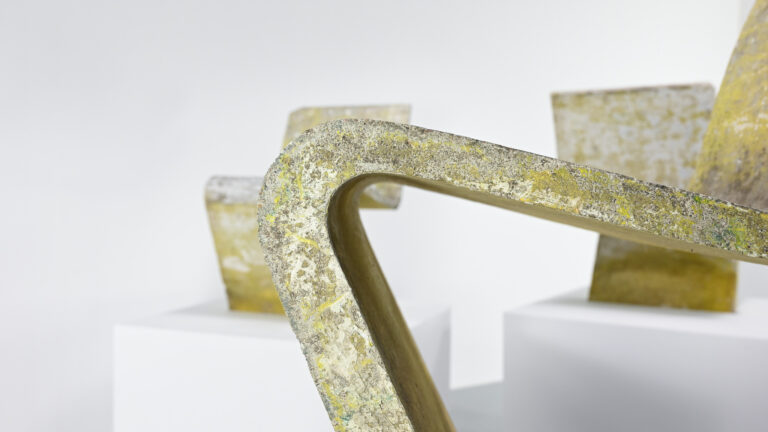
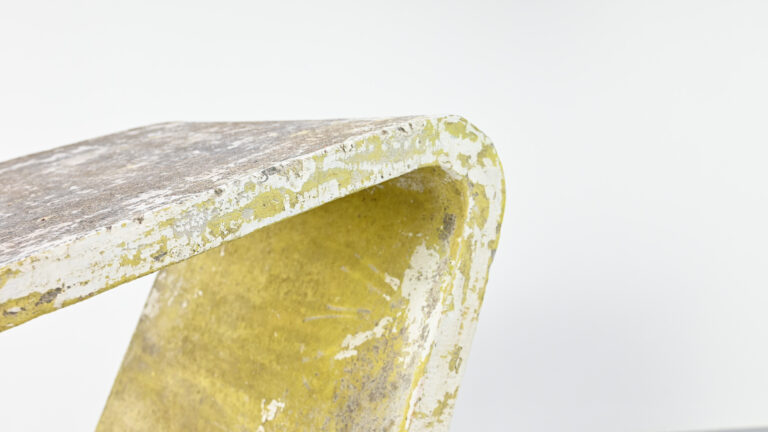
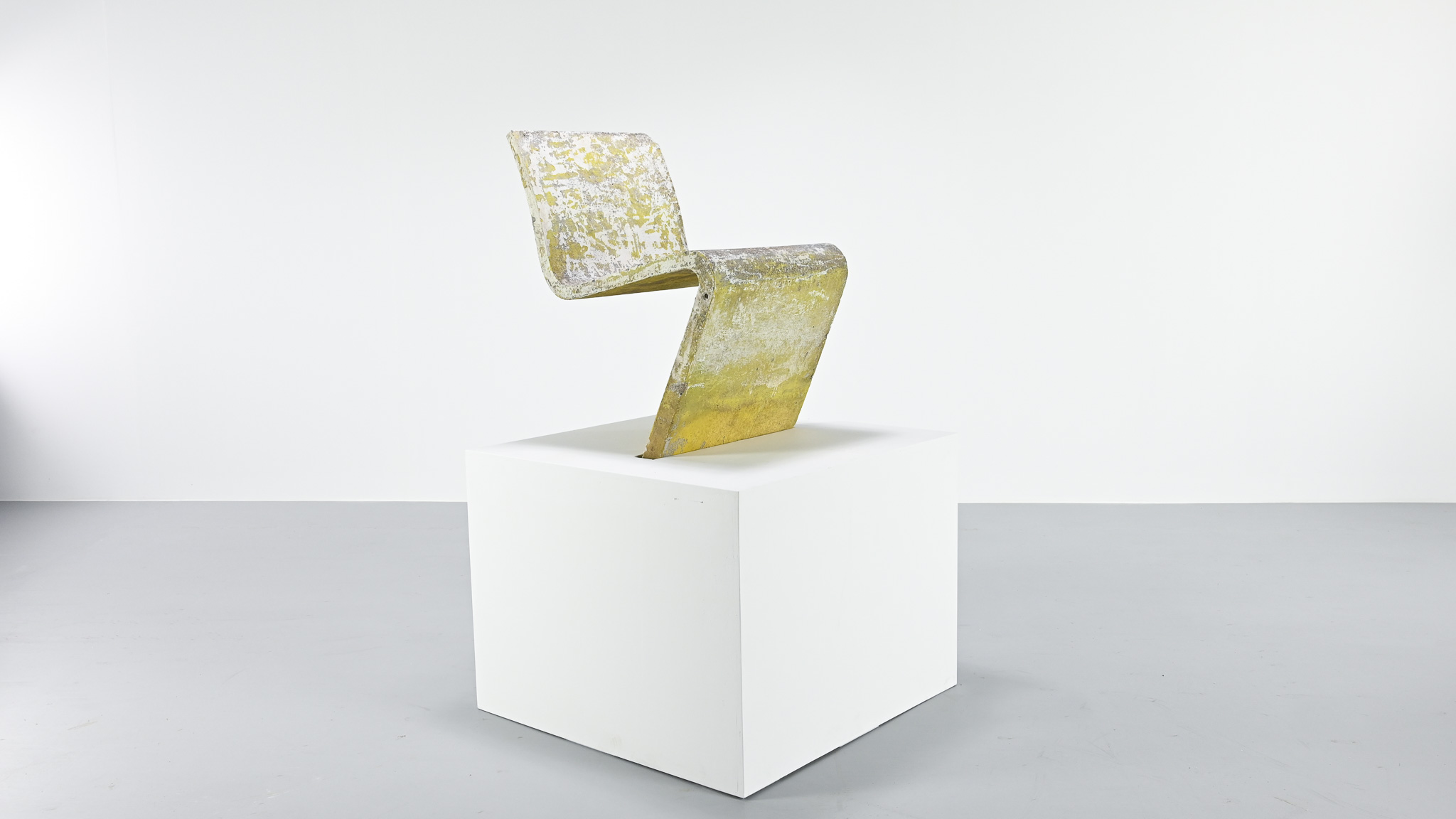
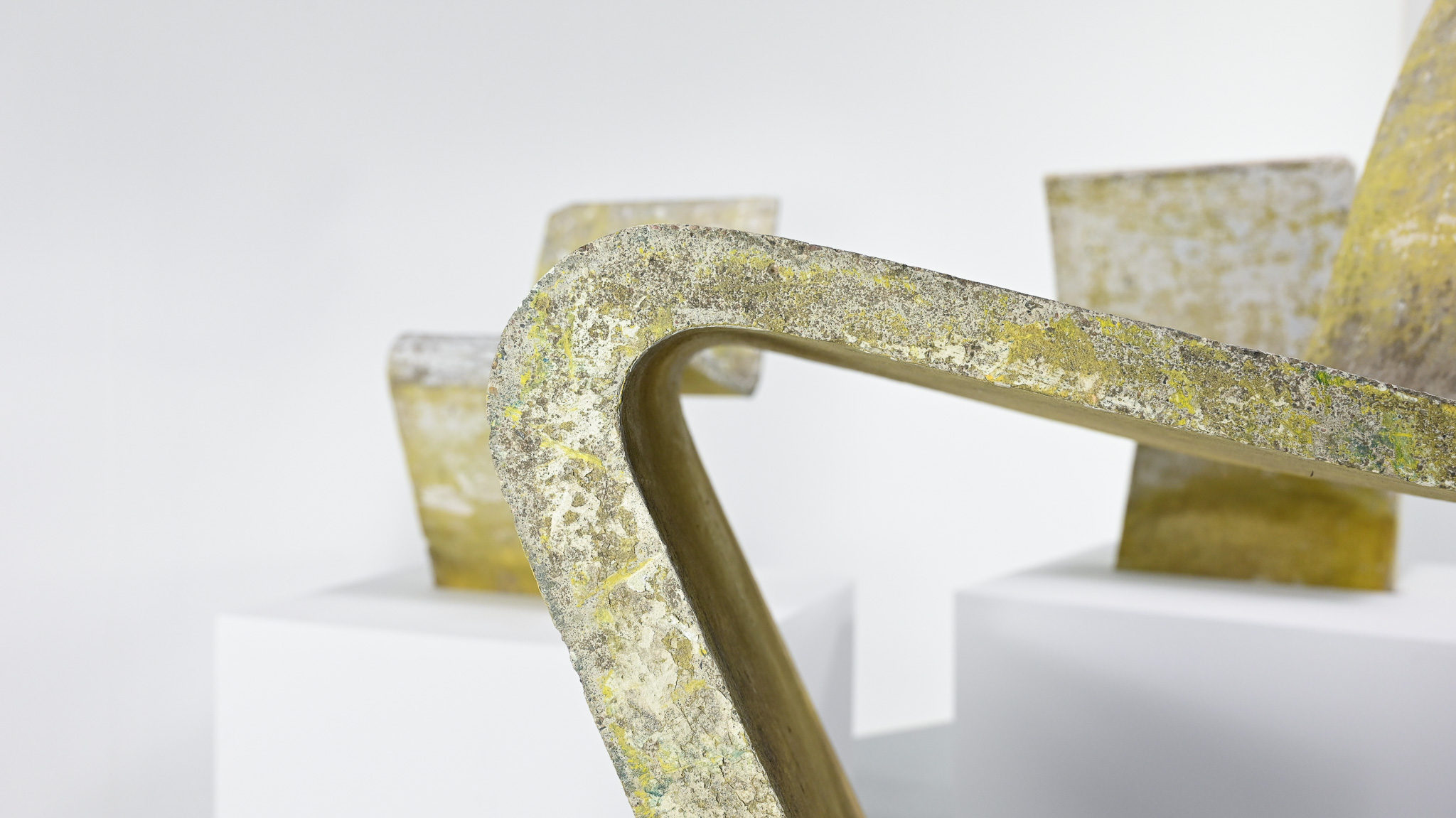
The chairs presented here remain in original condition and are structurally sound, showing signs of age including paint loss, surface wear, and a fine crack on one chair, consistent with long-term outdoor exposure. Due to its reinforced concrete construction, the chair remains perfectly stable. This patina, inseparable from their history, reflects Kjærholm’s original intention for the Beton Elementer — conceived to endure over time.
Surviving today as a complete suite of four, these chairs represent one of the rarest and most unconventional chapters in Kjærholm’s work.
Bibliography: Michael Sheridan, in collaboration with the Louisiana Museum of Modern Art, Poul Kjærholm: Furniture Architect, 2006, pp. 51, 53.
The chairs were originally designed to be anchored directly into the ground. The custom display plinths are included and indicate the intended ground level, providing a ready-made template for the correct installation angle and depth.
A complete restoration can be arranged upon request. Contact us for further details.
Each piece is carefully cleaned and, when necessary, restored with respect for its original conception.
Subtle signs of use and natural patina may remain, as part of its lived history.