
There is Art Deco, Art Nouveau; there is design, modernism or Memphis… And then there are pieces that resist classification. Gérard Rigot’s creations, as if drawn from a fable, most probably belong to that latter category.
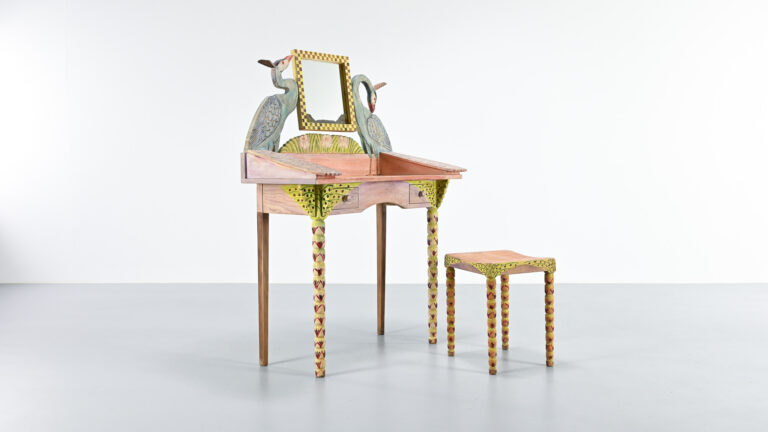
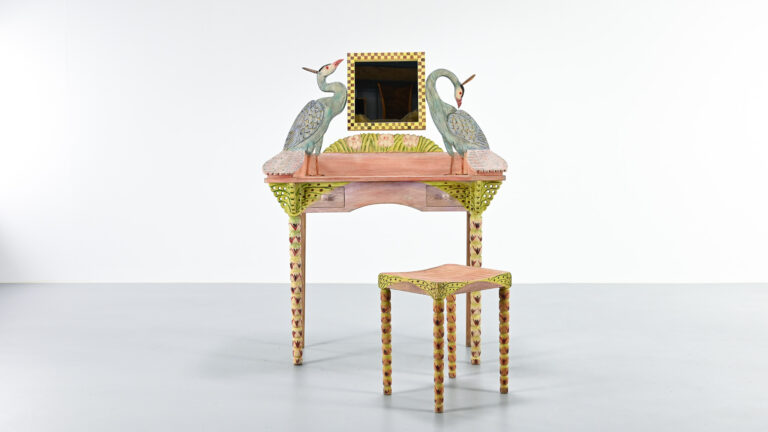
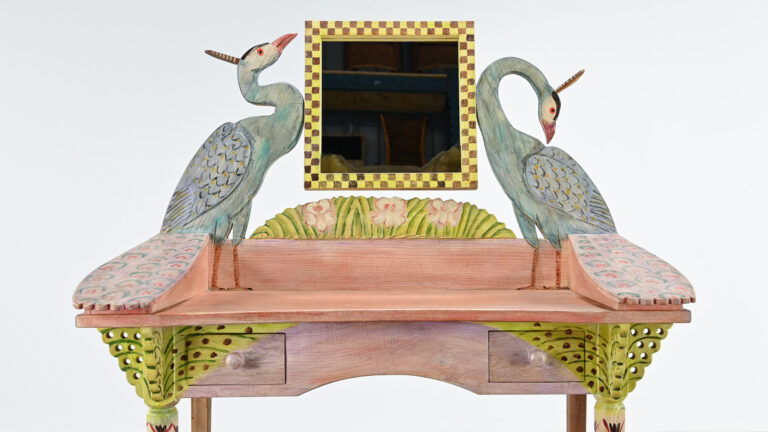
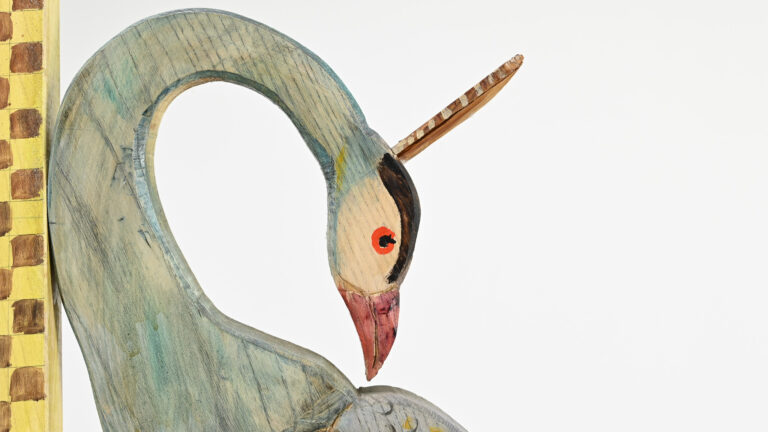
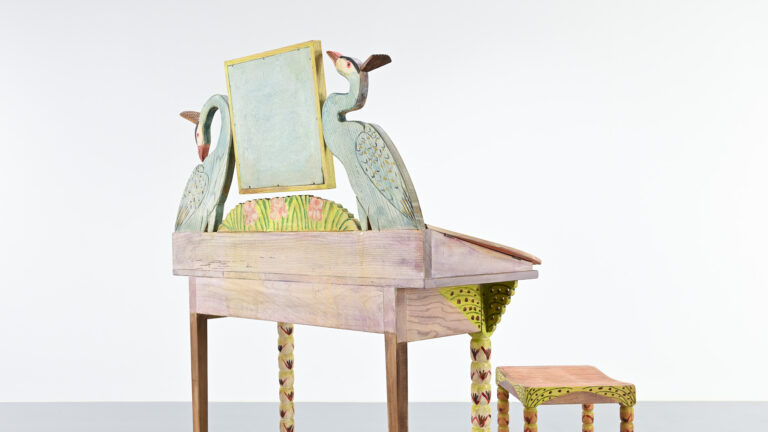
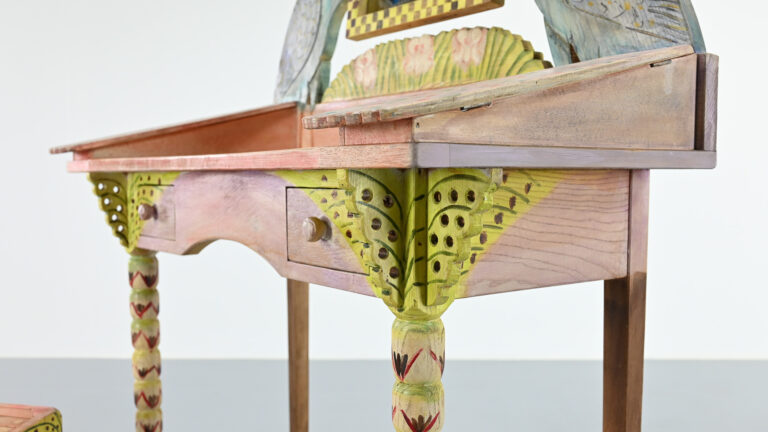
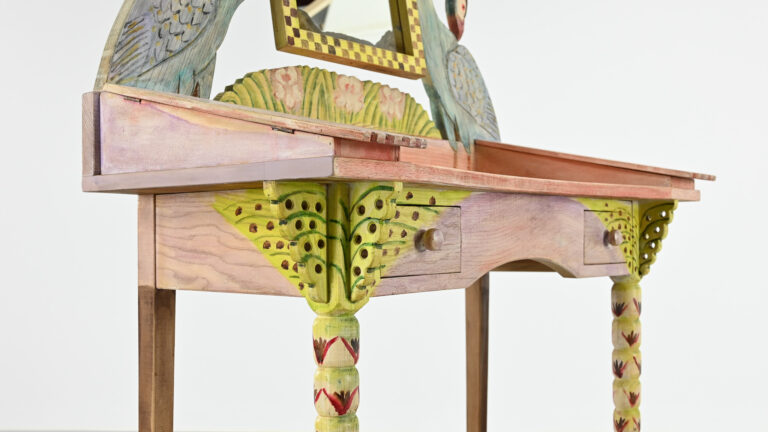
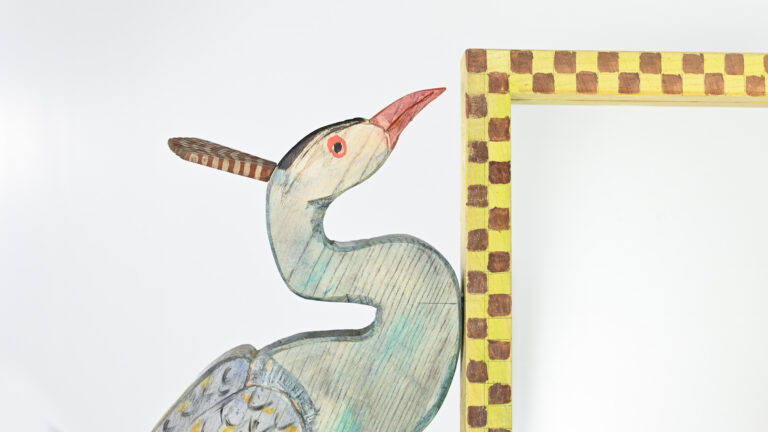
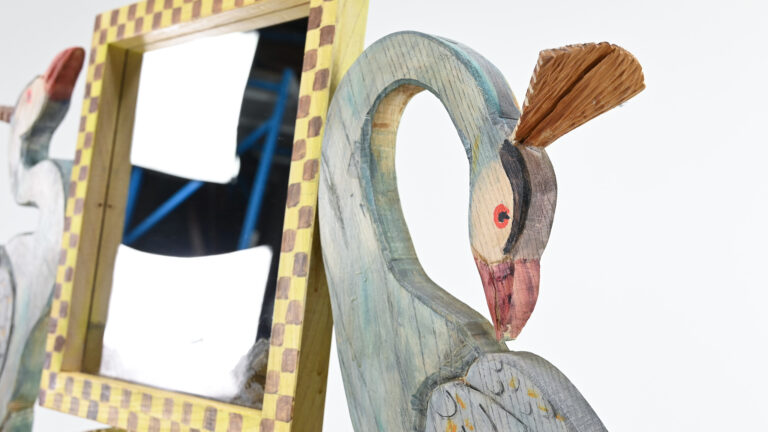
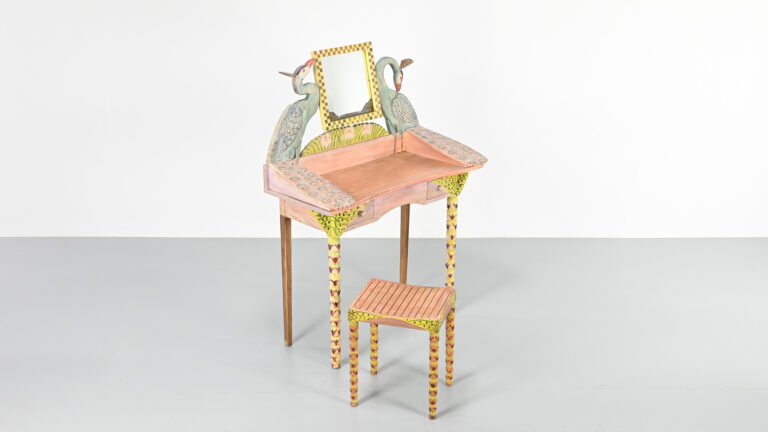
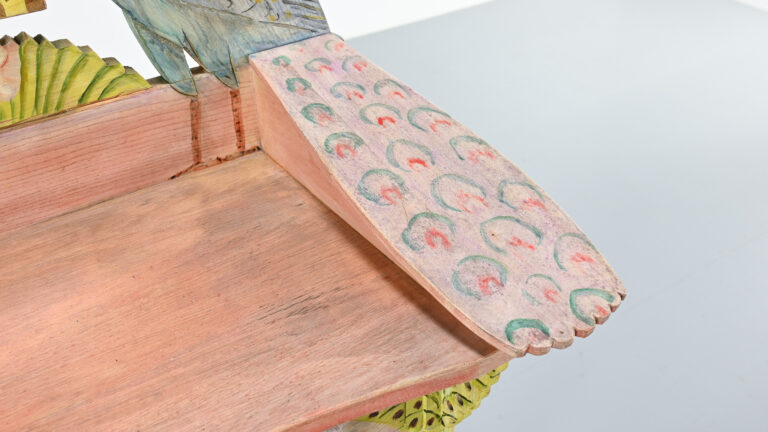
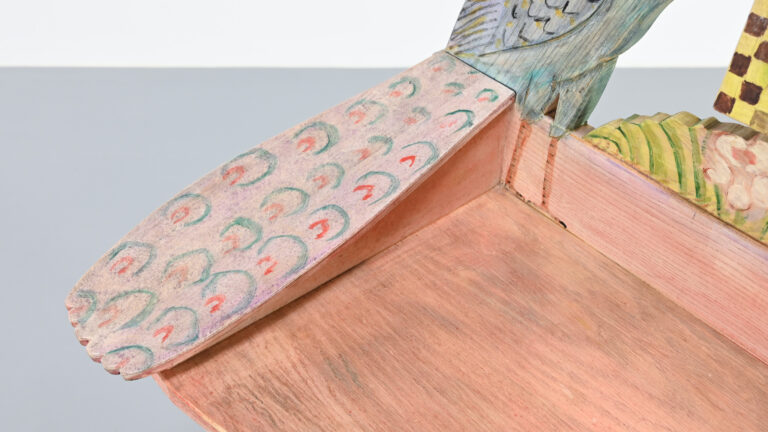
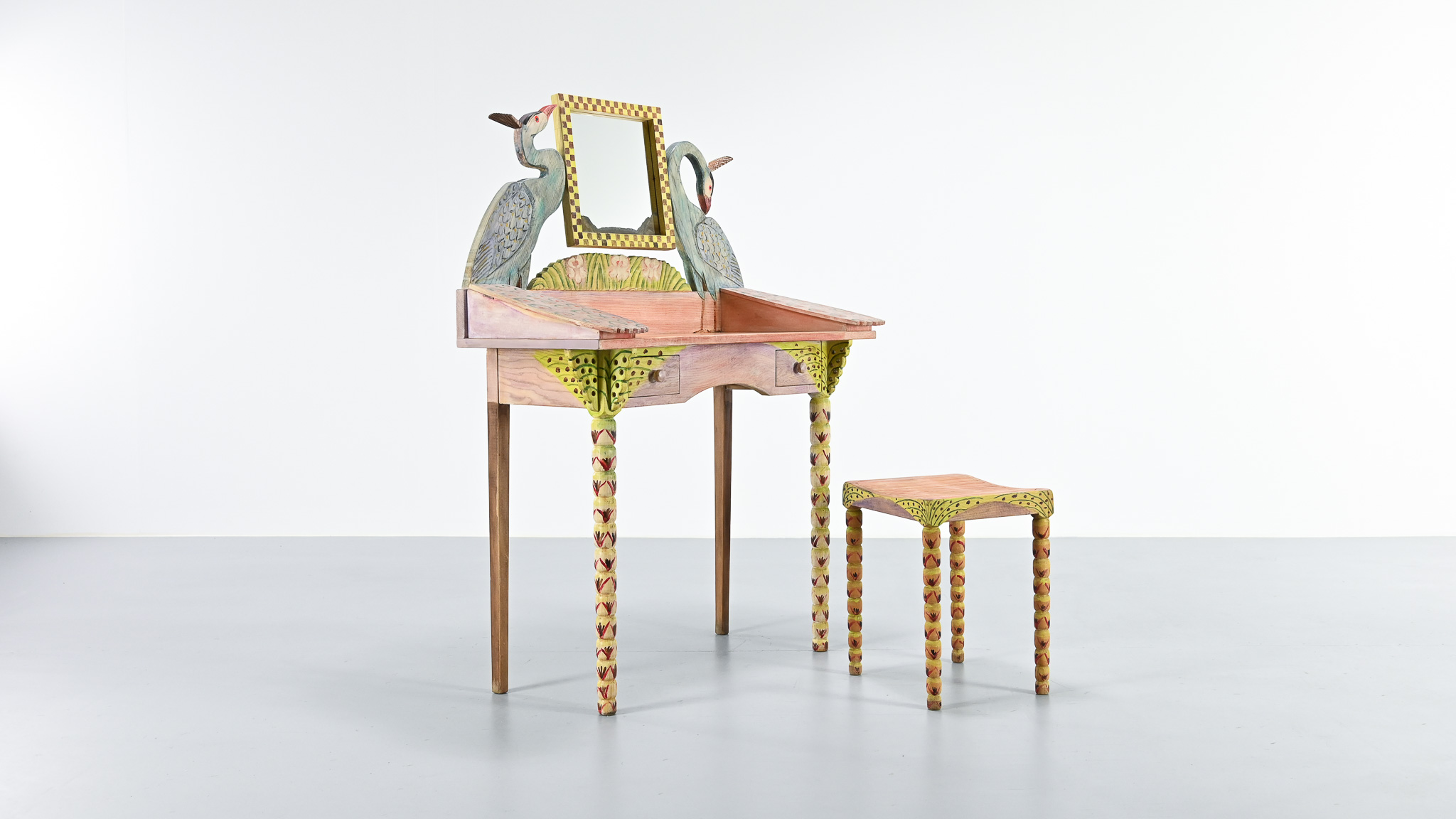
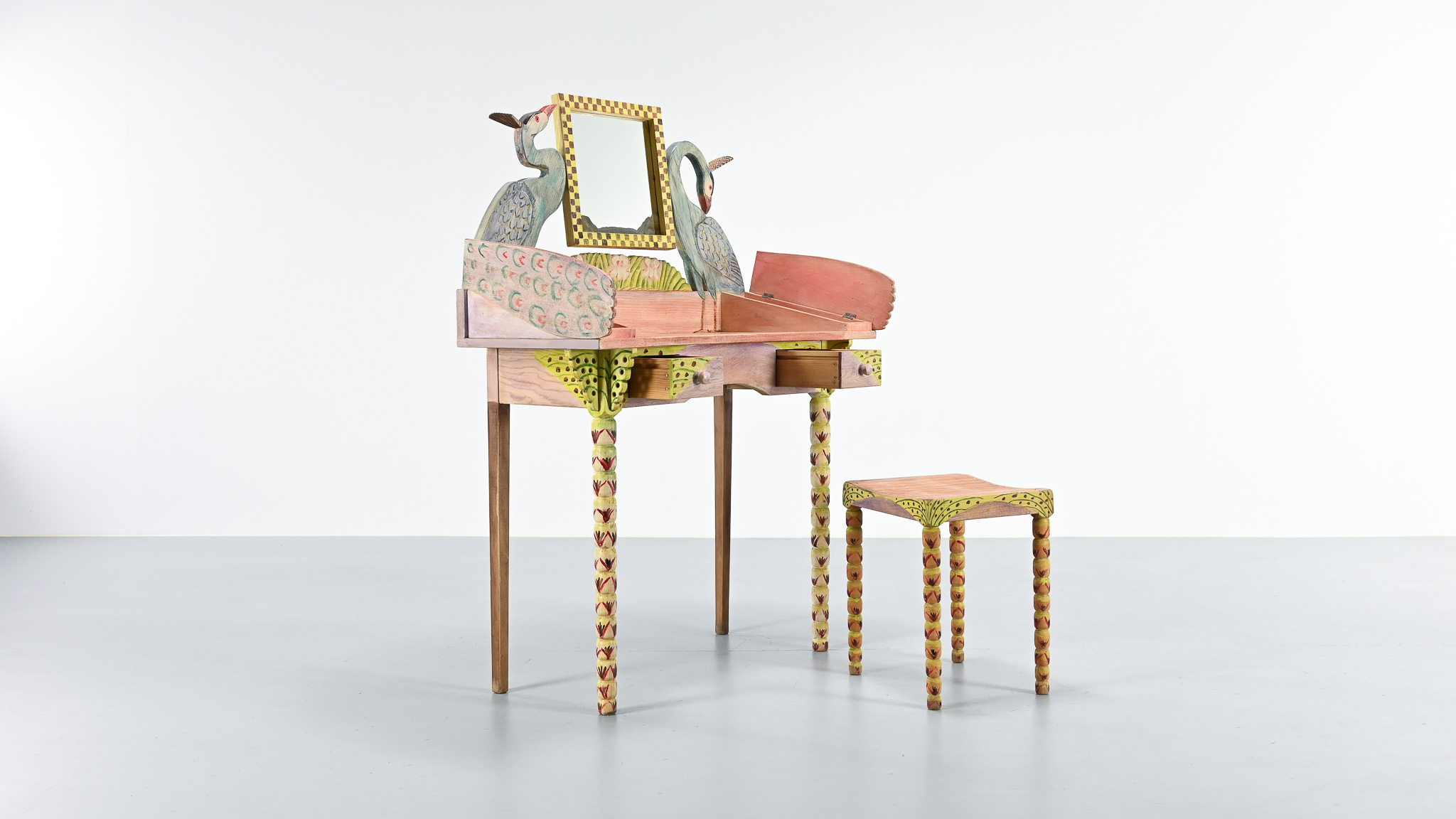
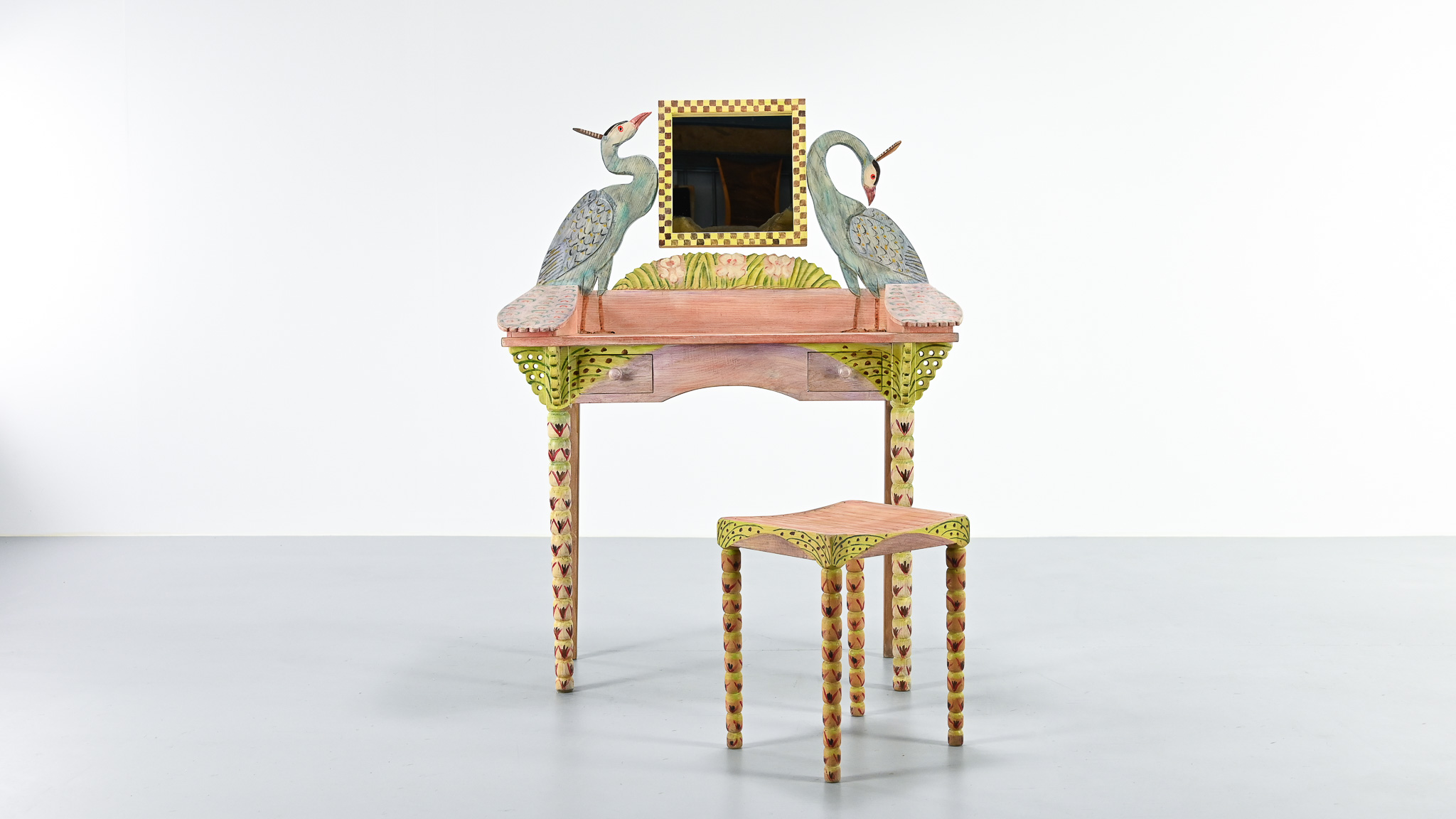
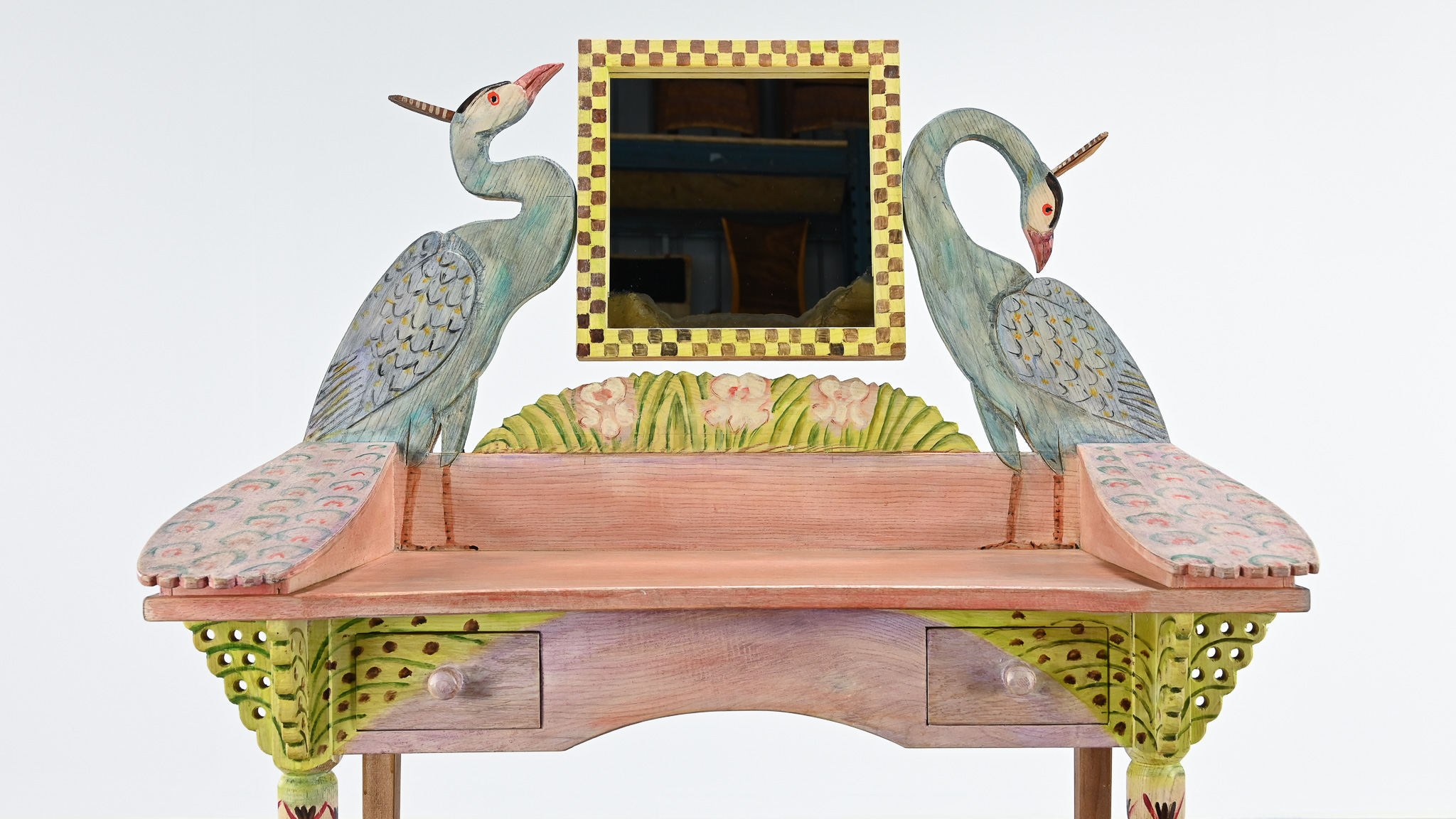
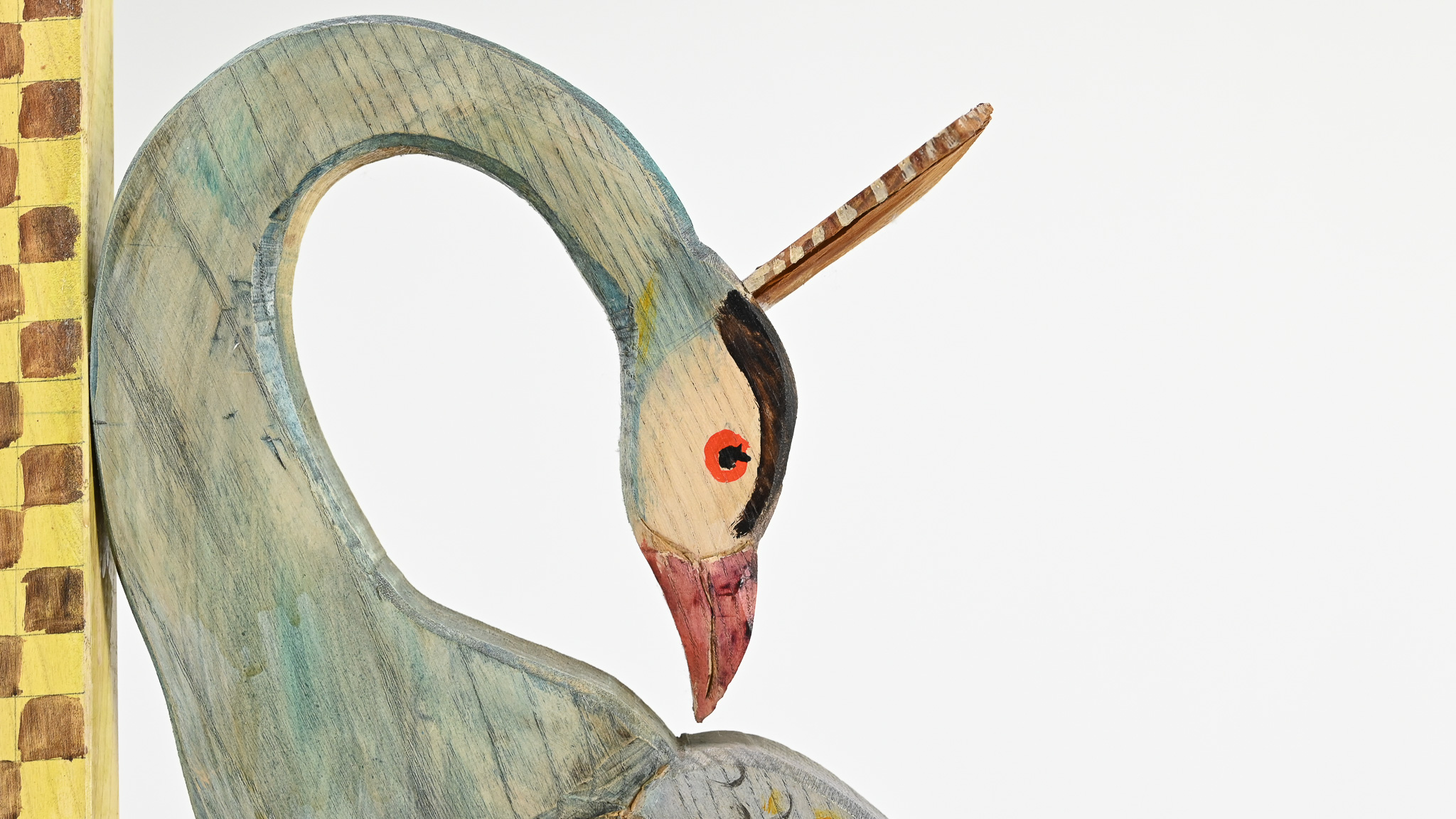
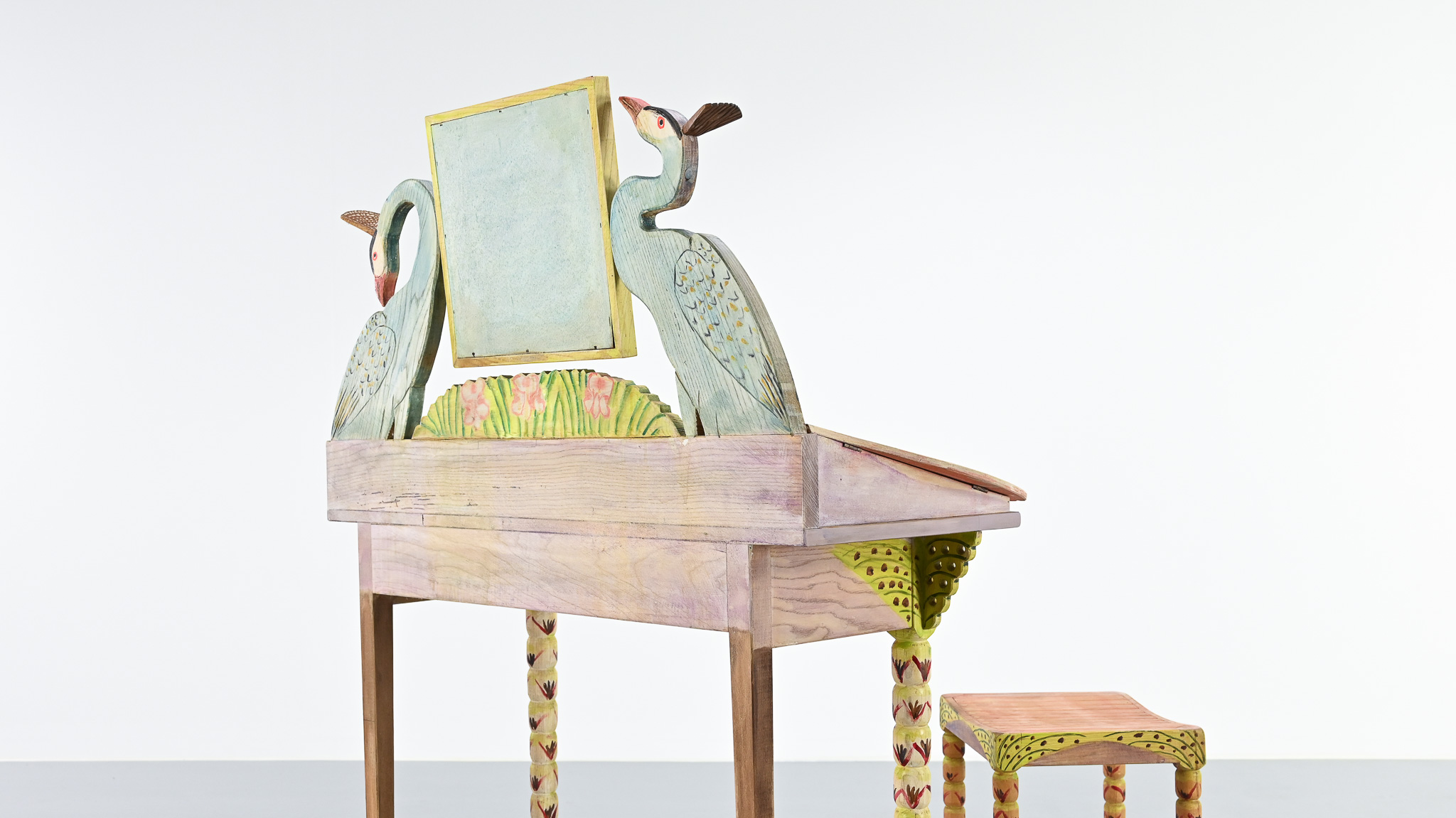
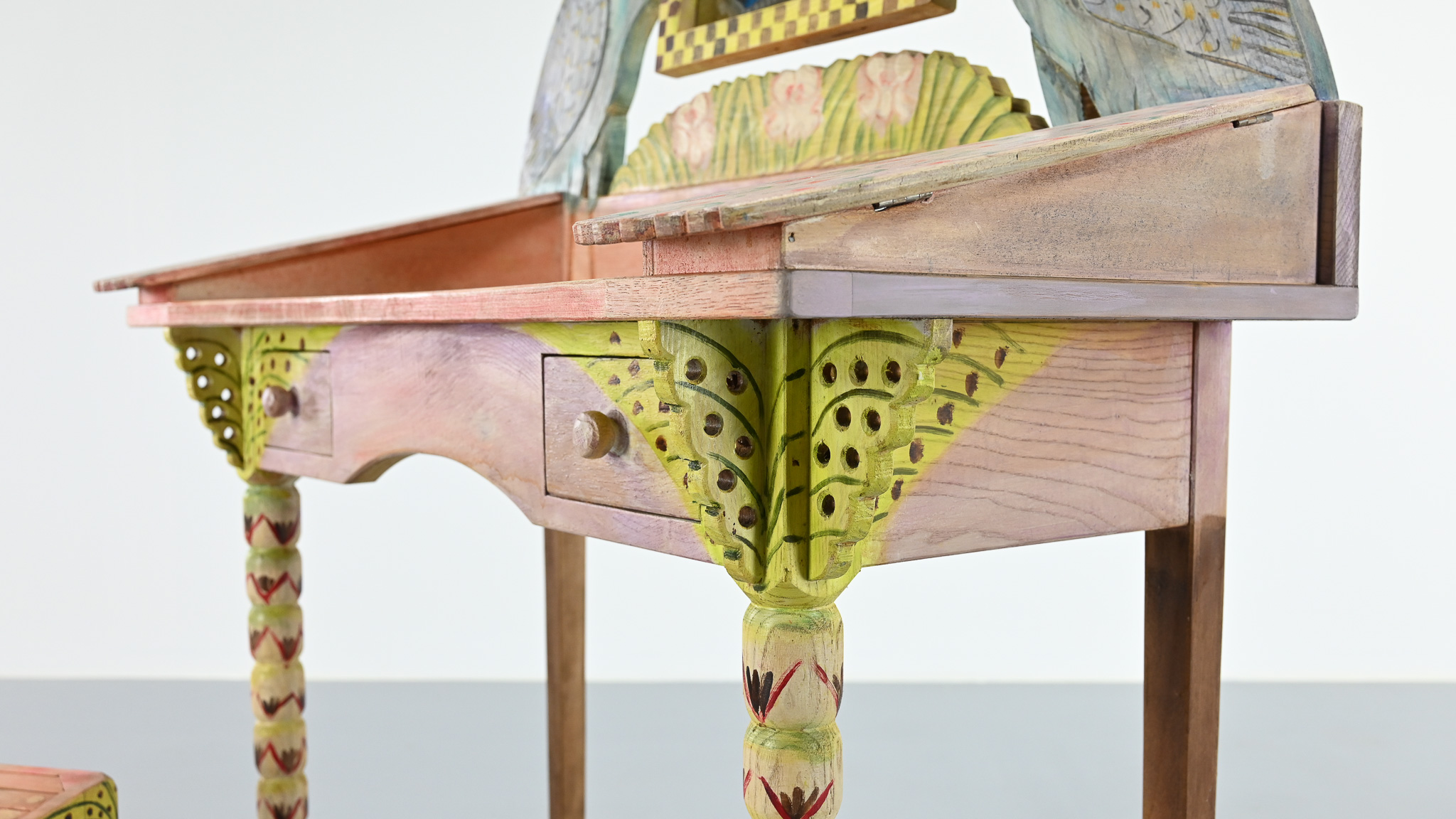
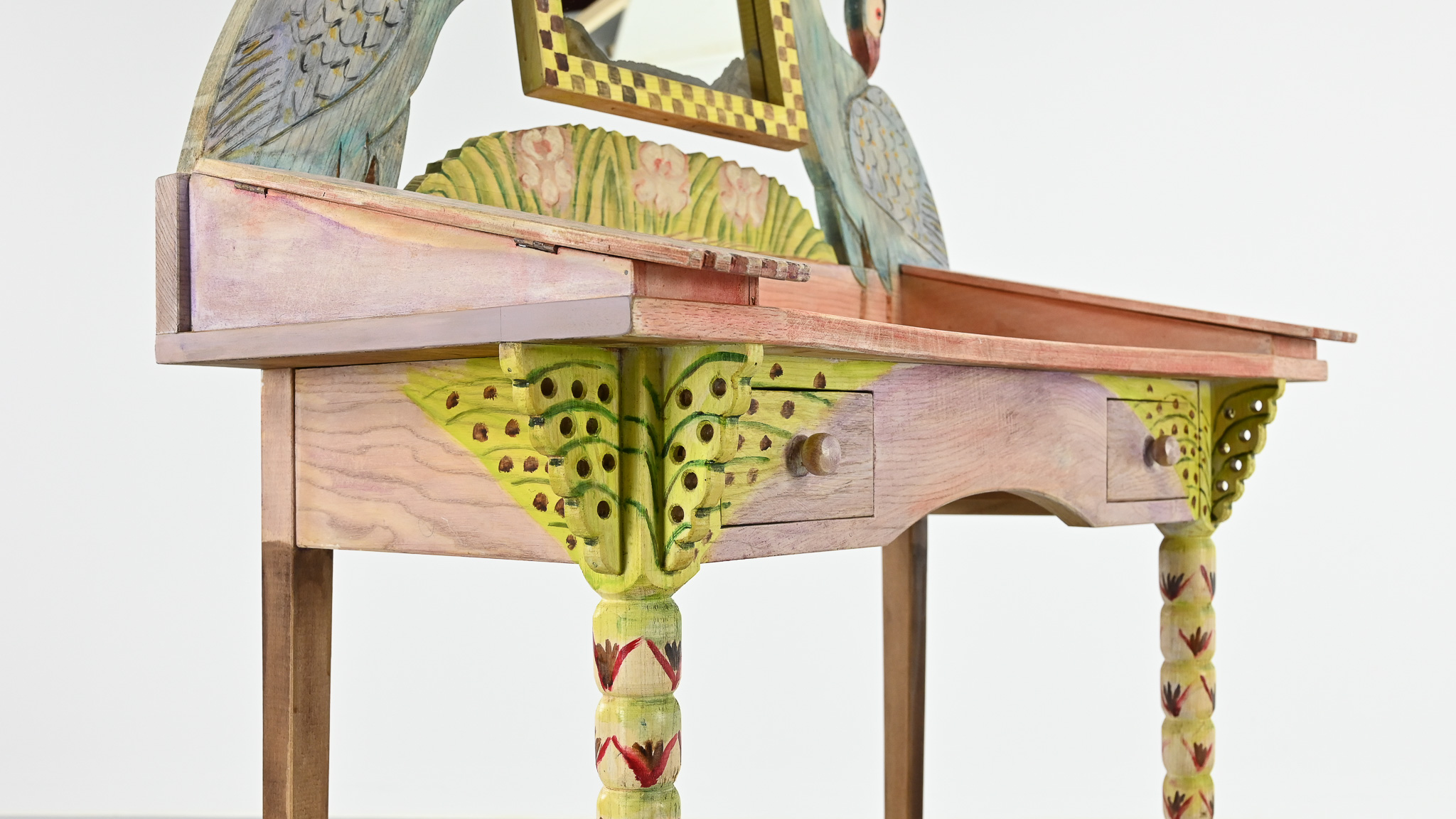
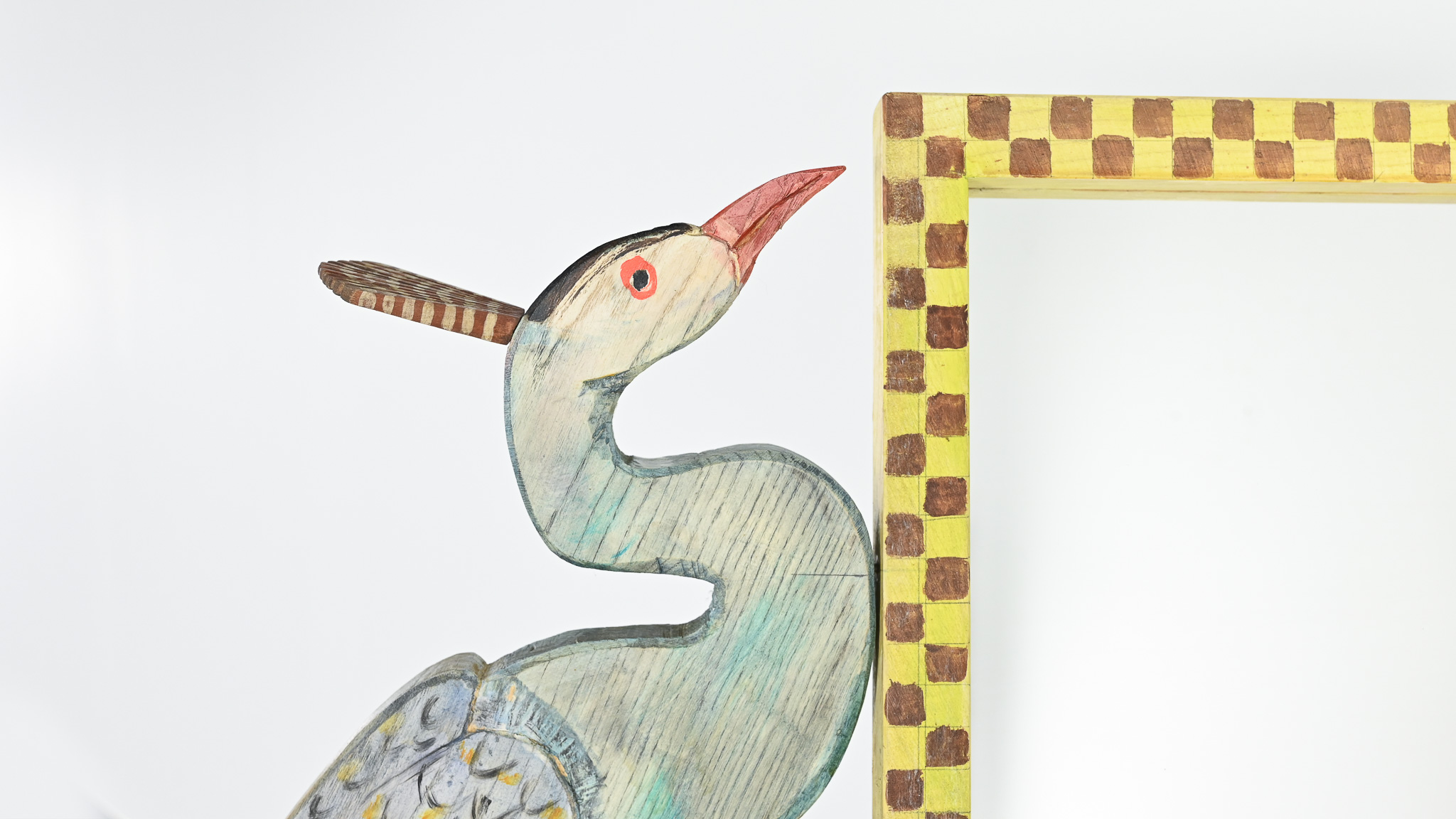
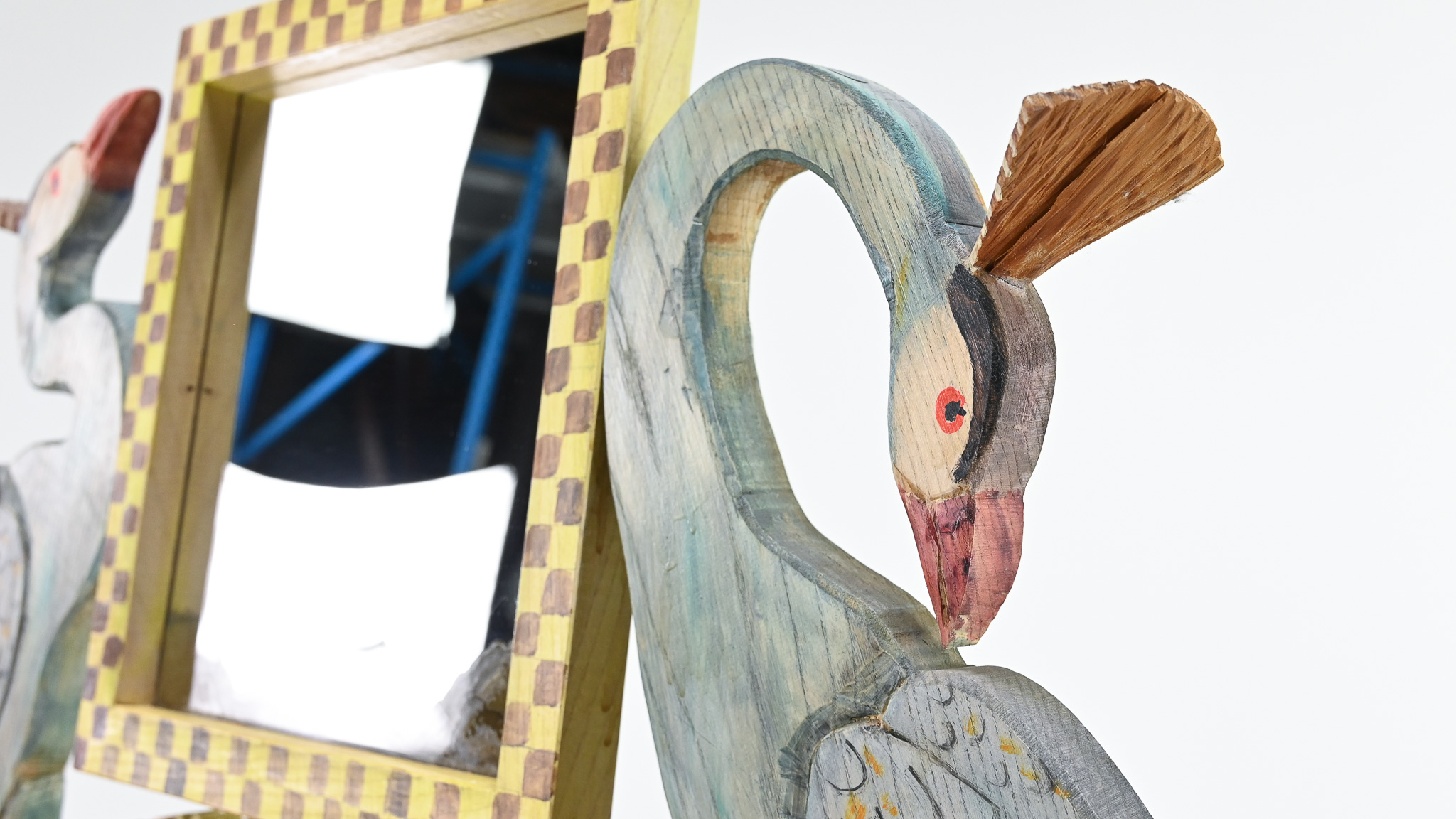
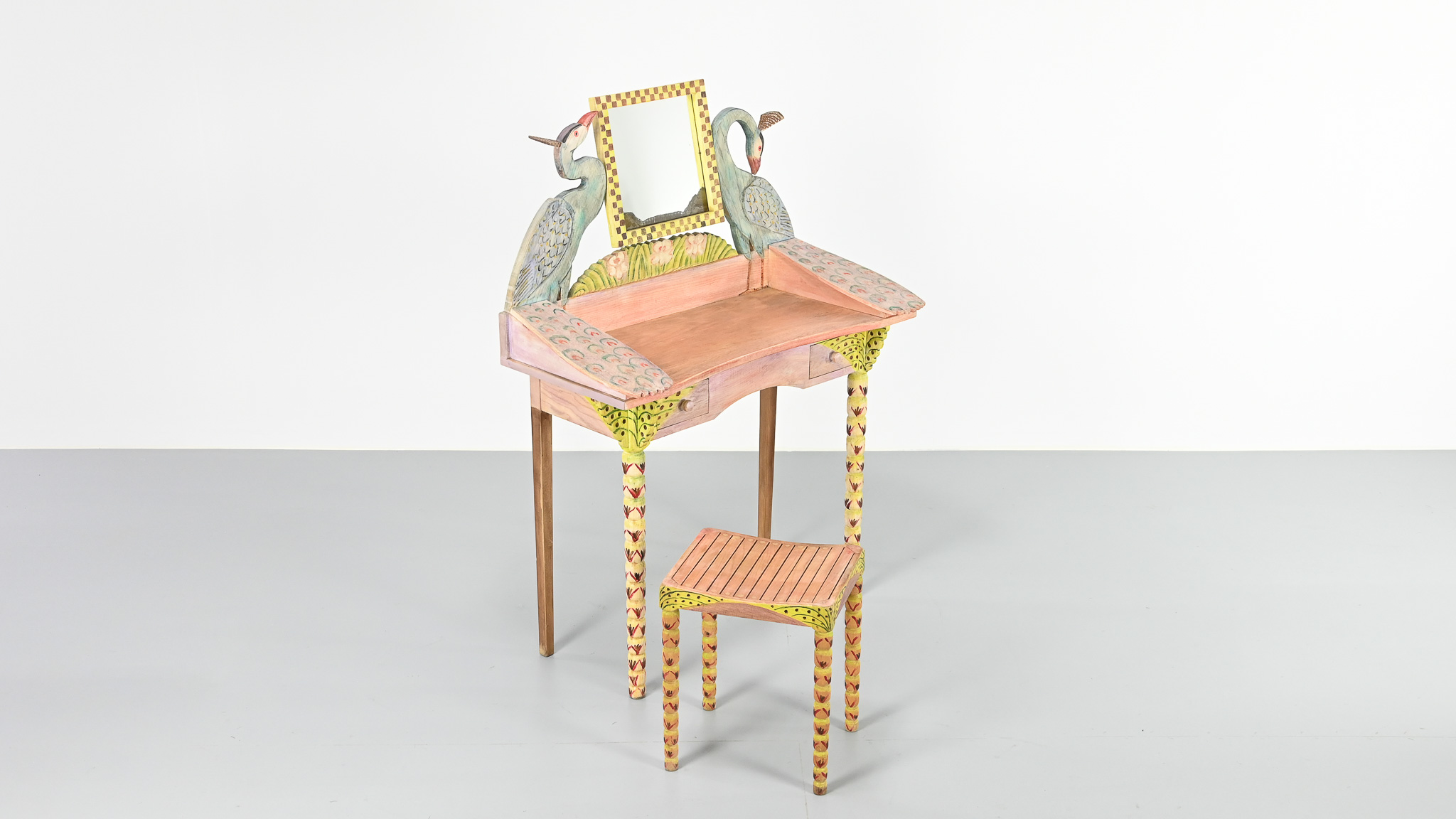
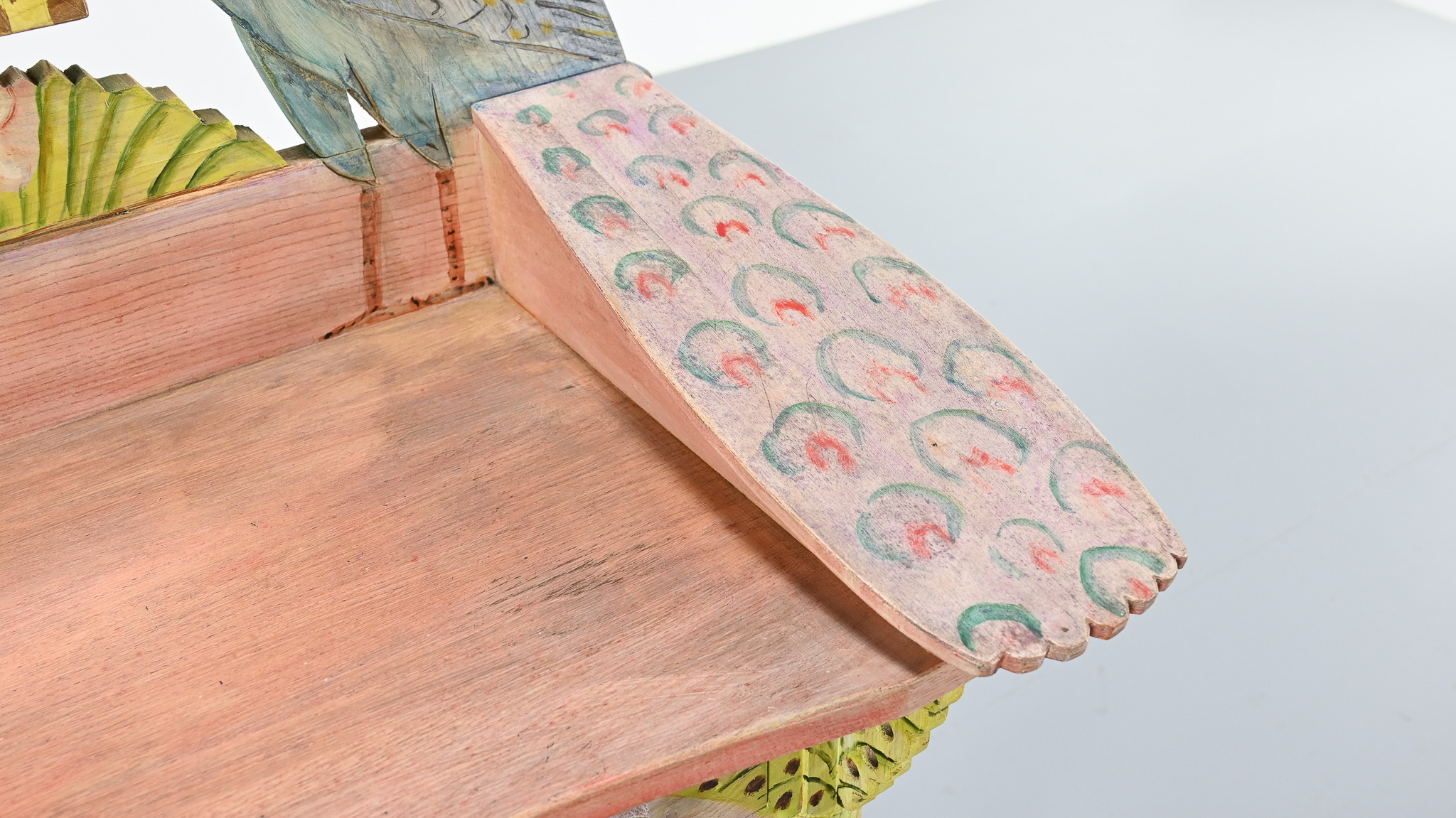
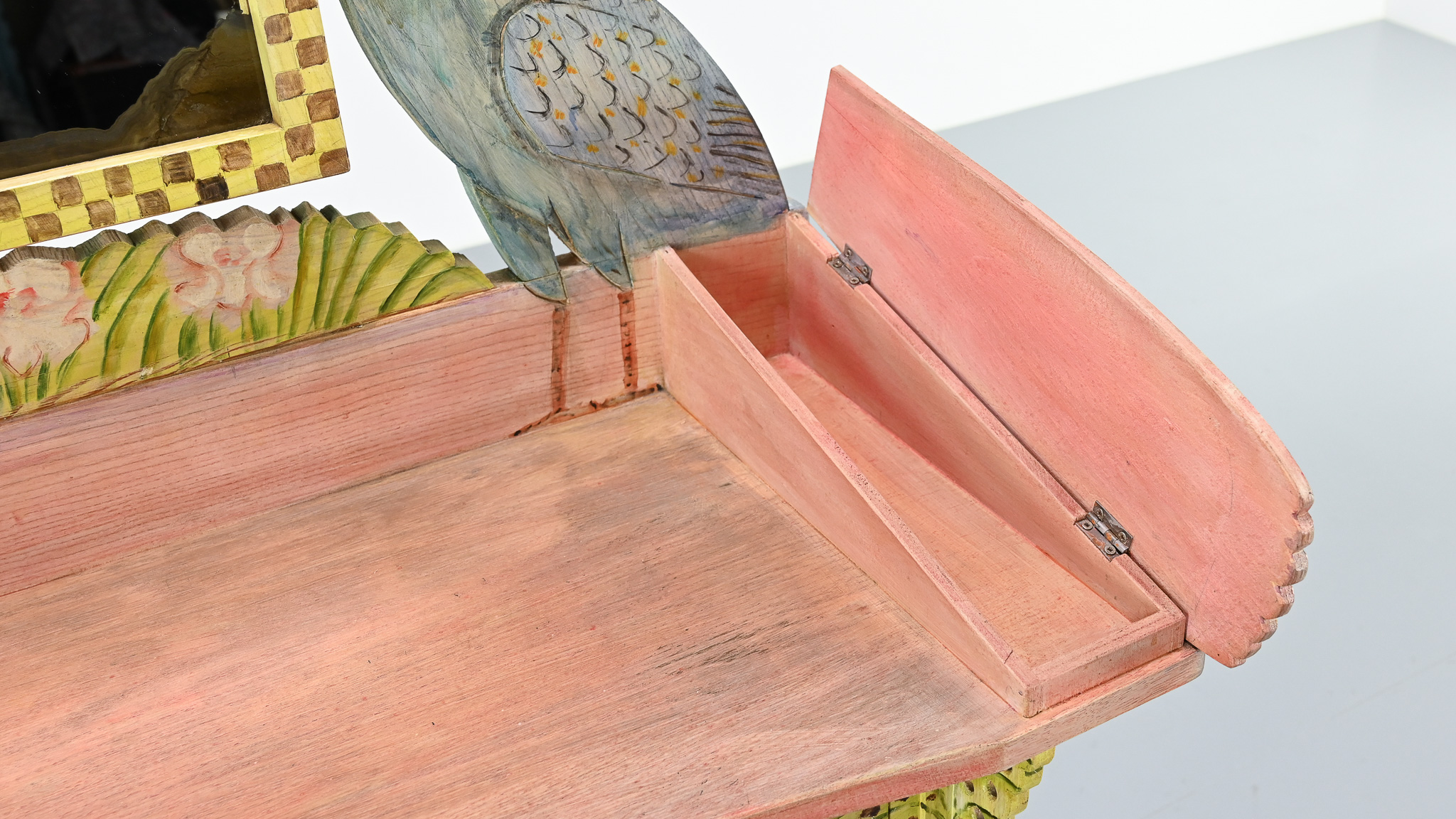
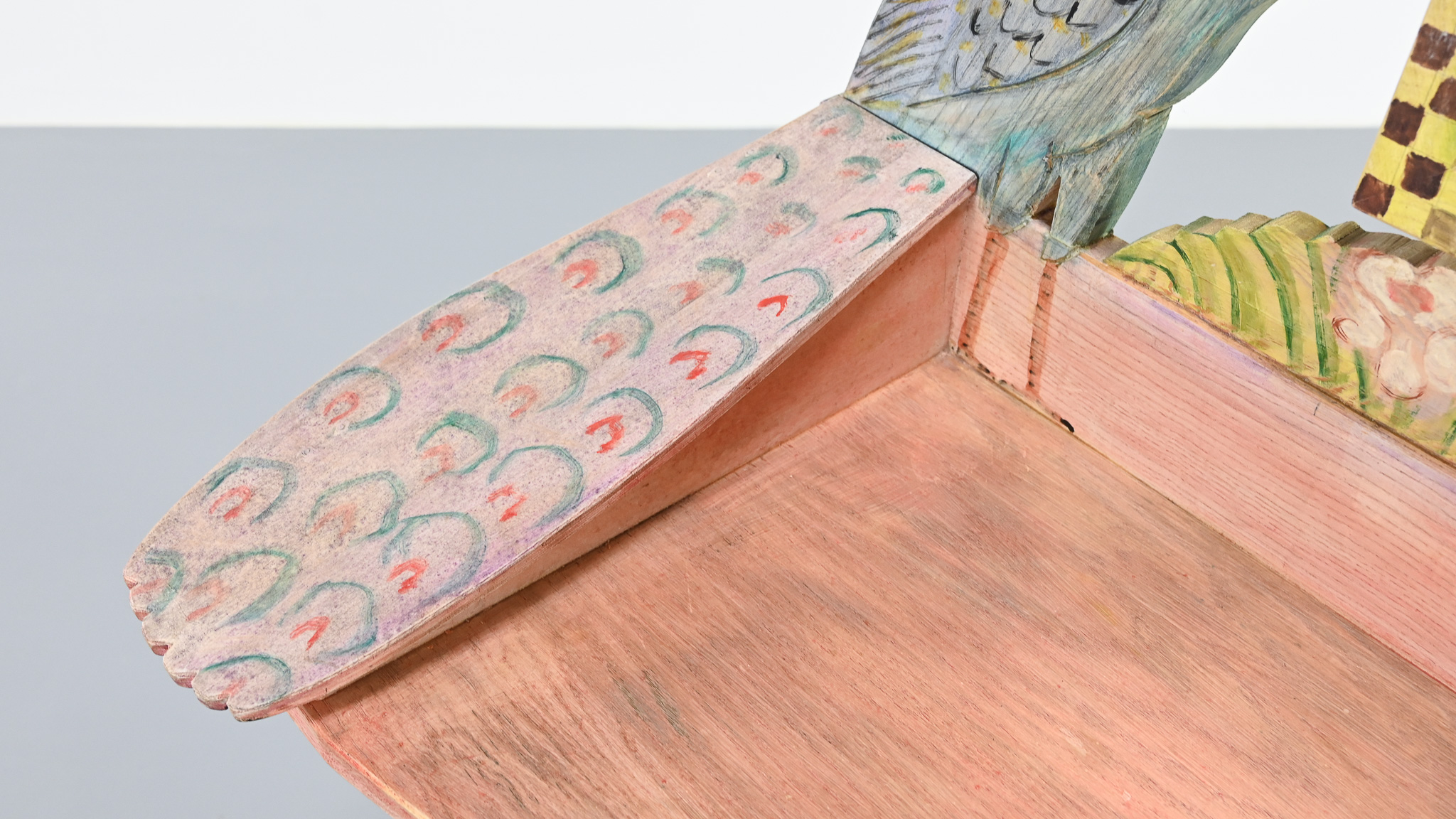
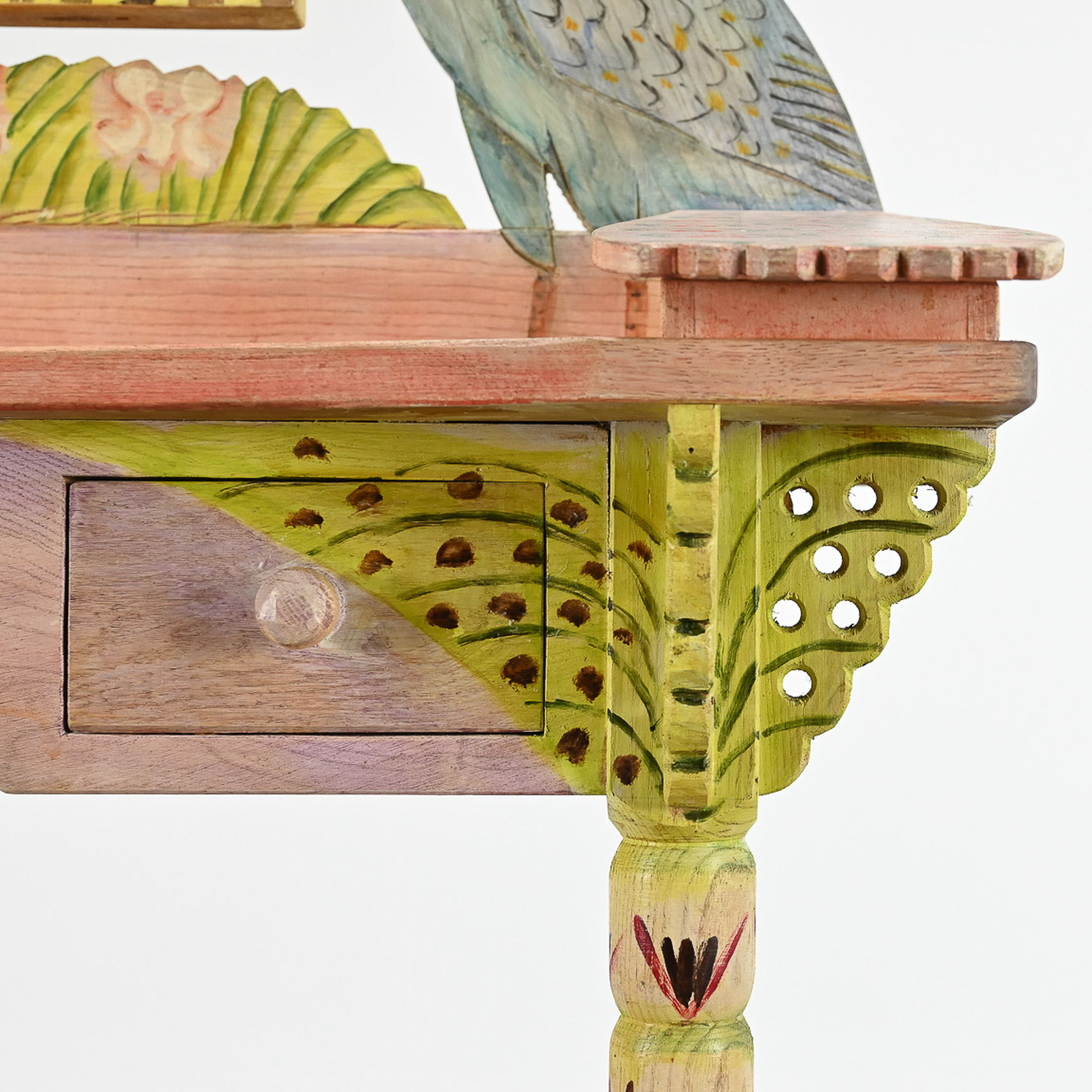
Carved in wood and entirely hand-painted, this remarkable dressing table, flanked by two sculpted peacocks, emerges from Rigot’s singular bestiary, where furniture becomes functional sculpture.
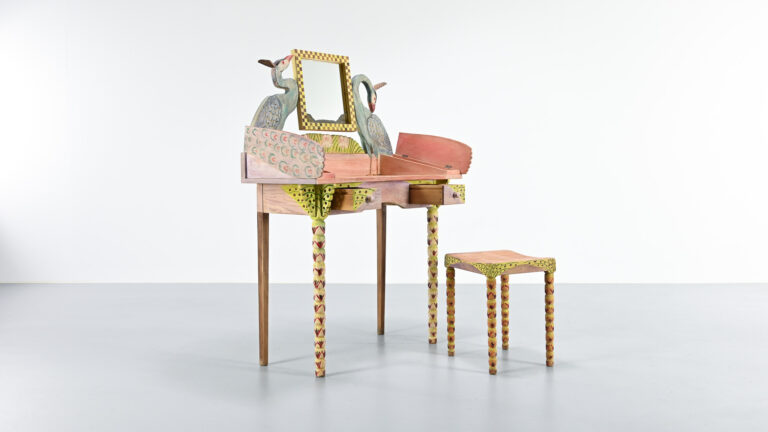
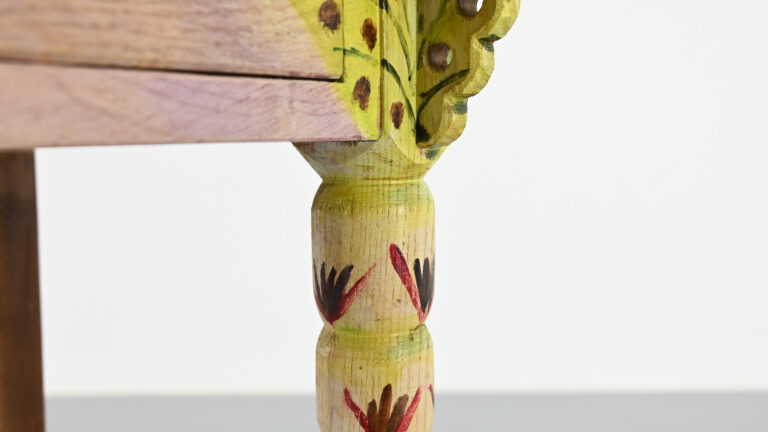
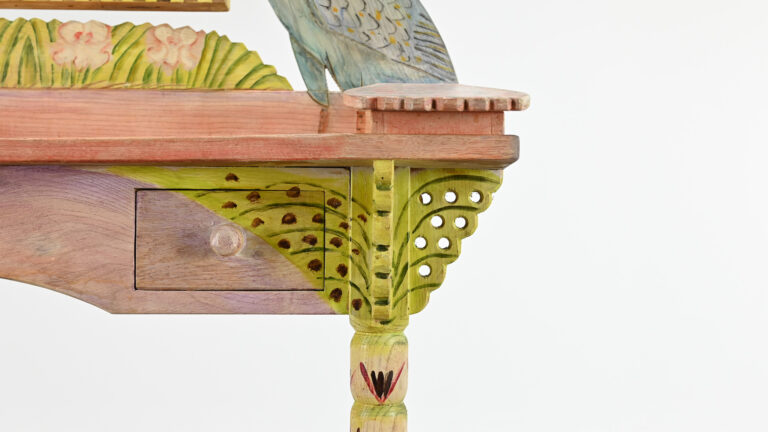
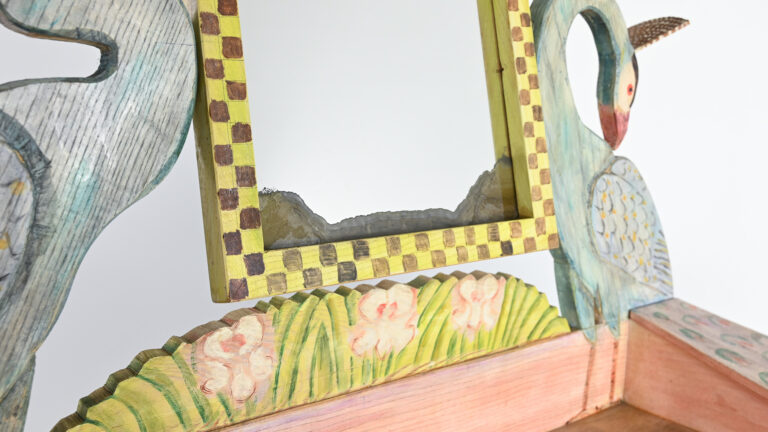
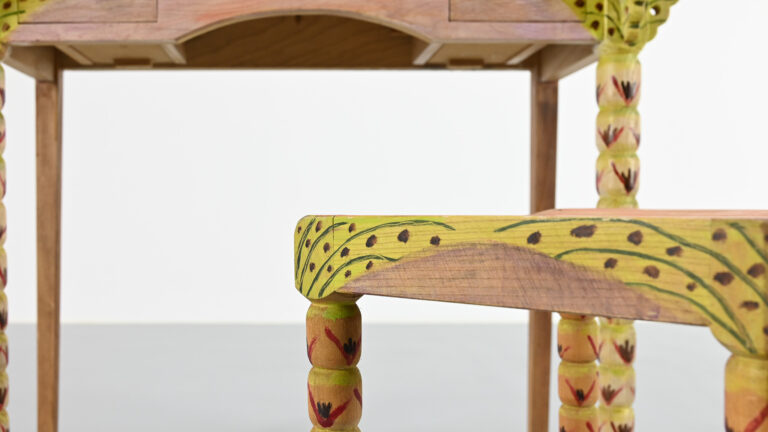
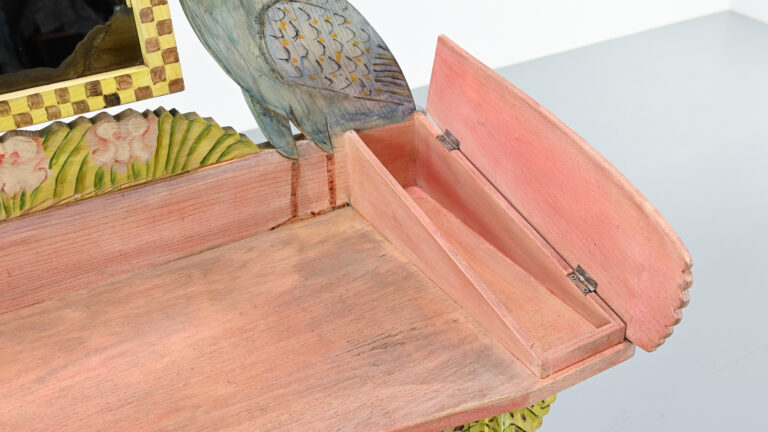
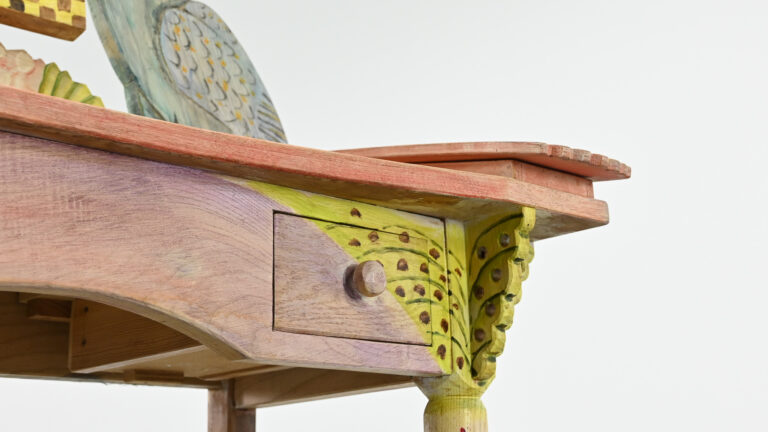
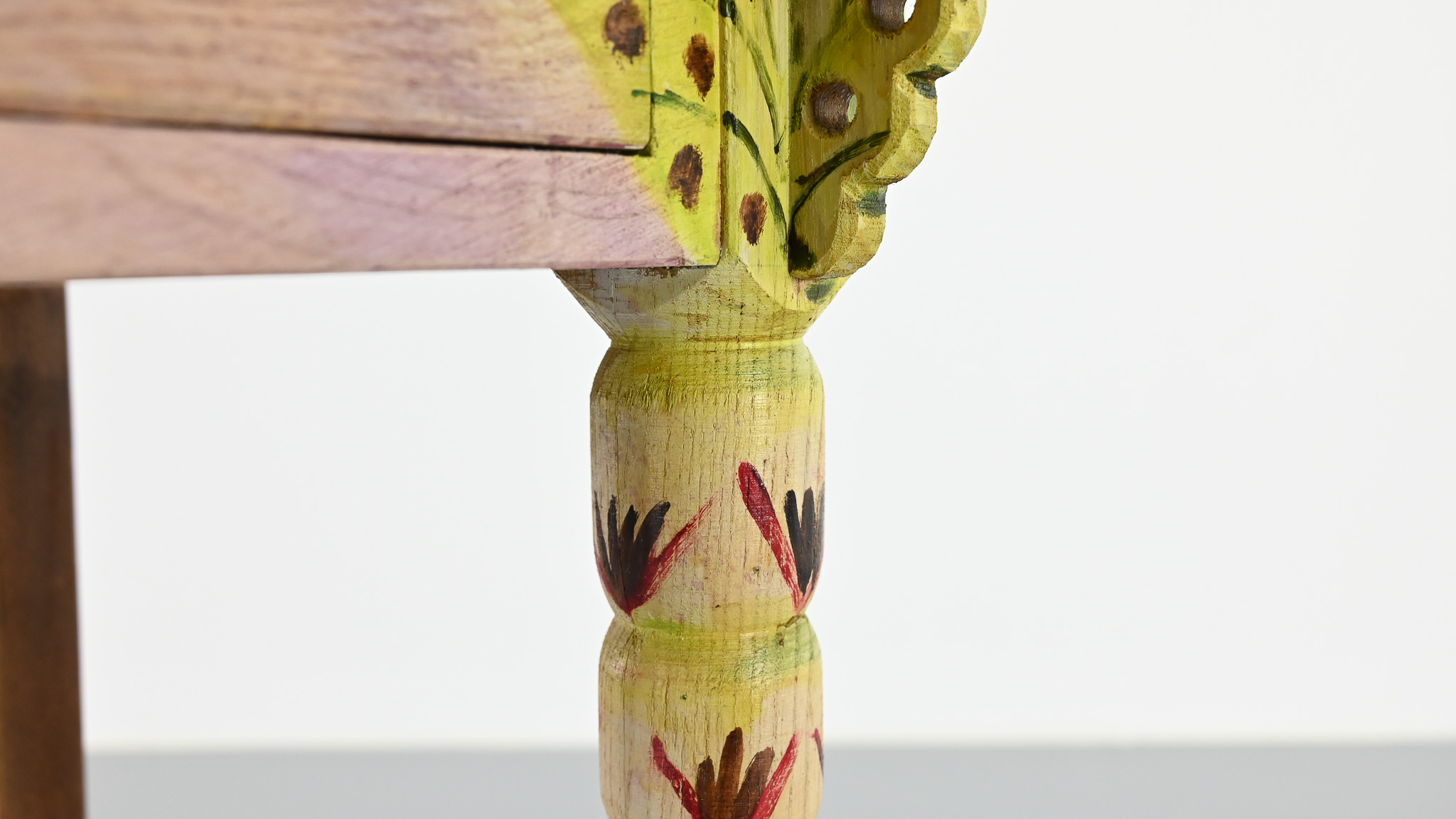
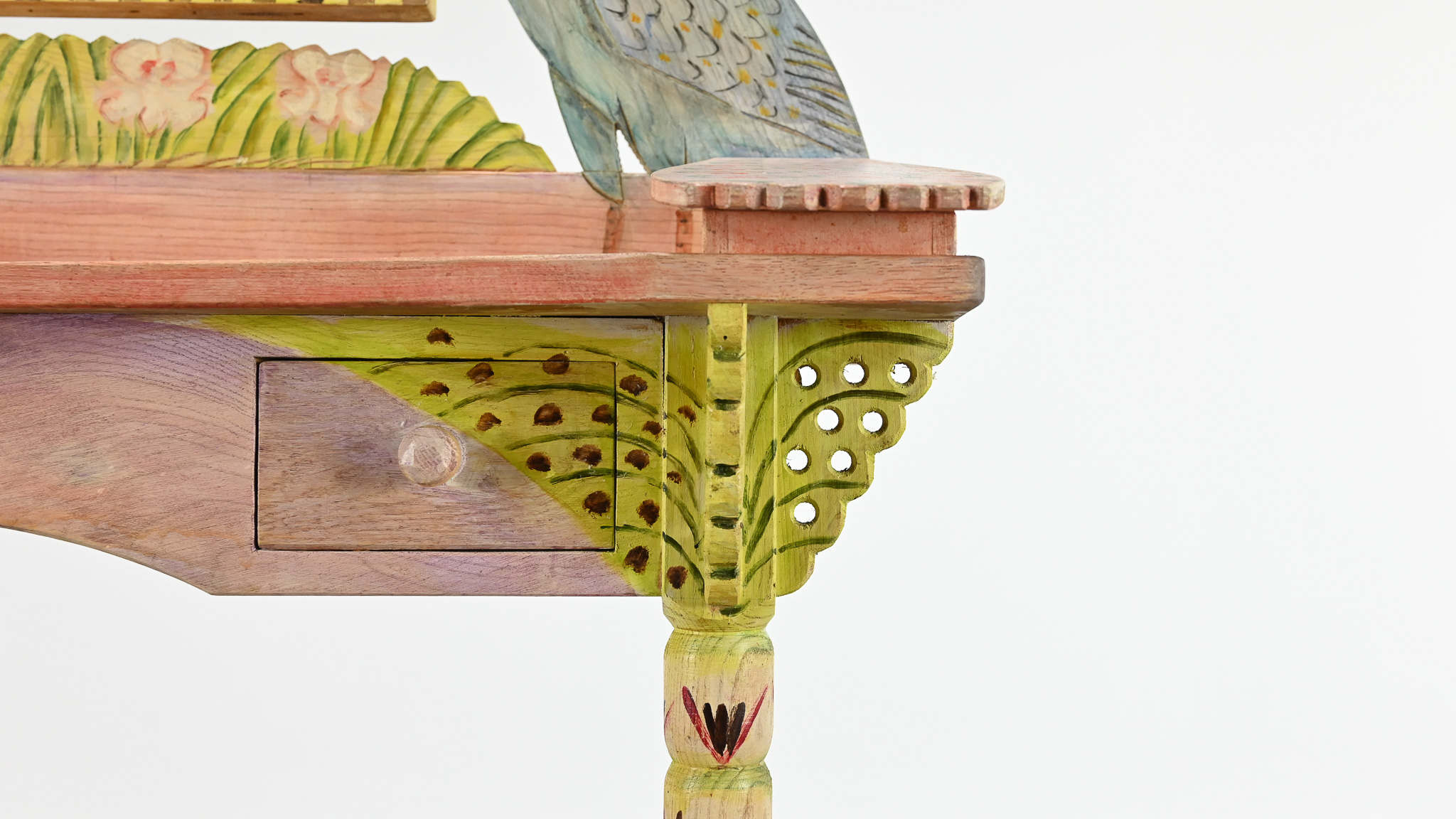
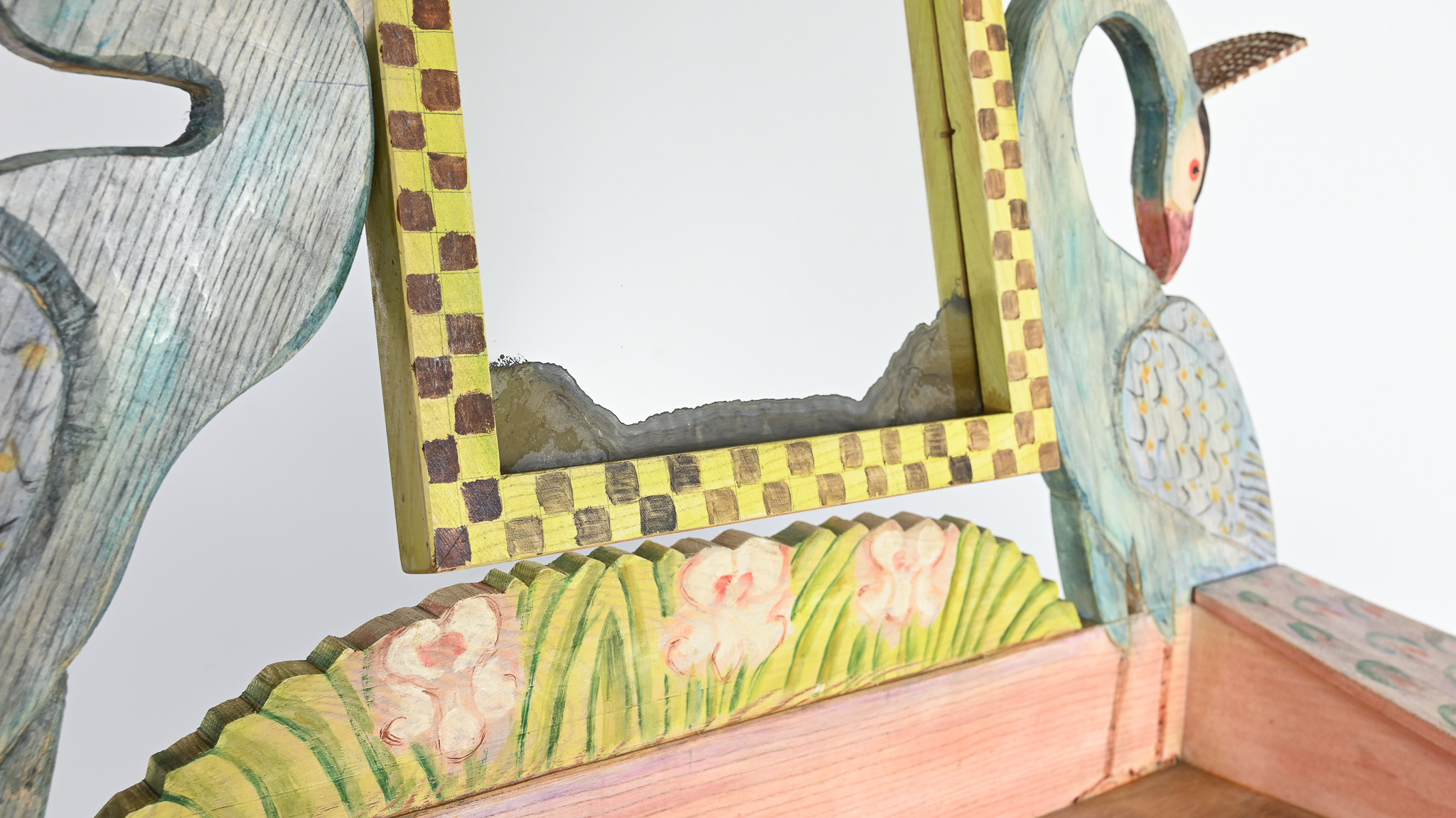
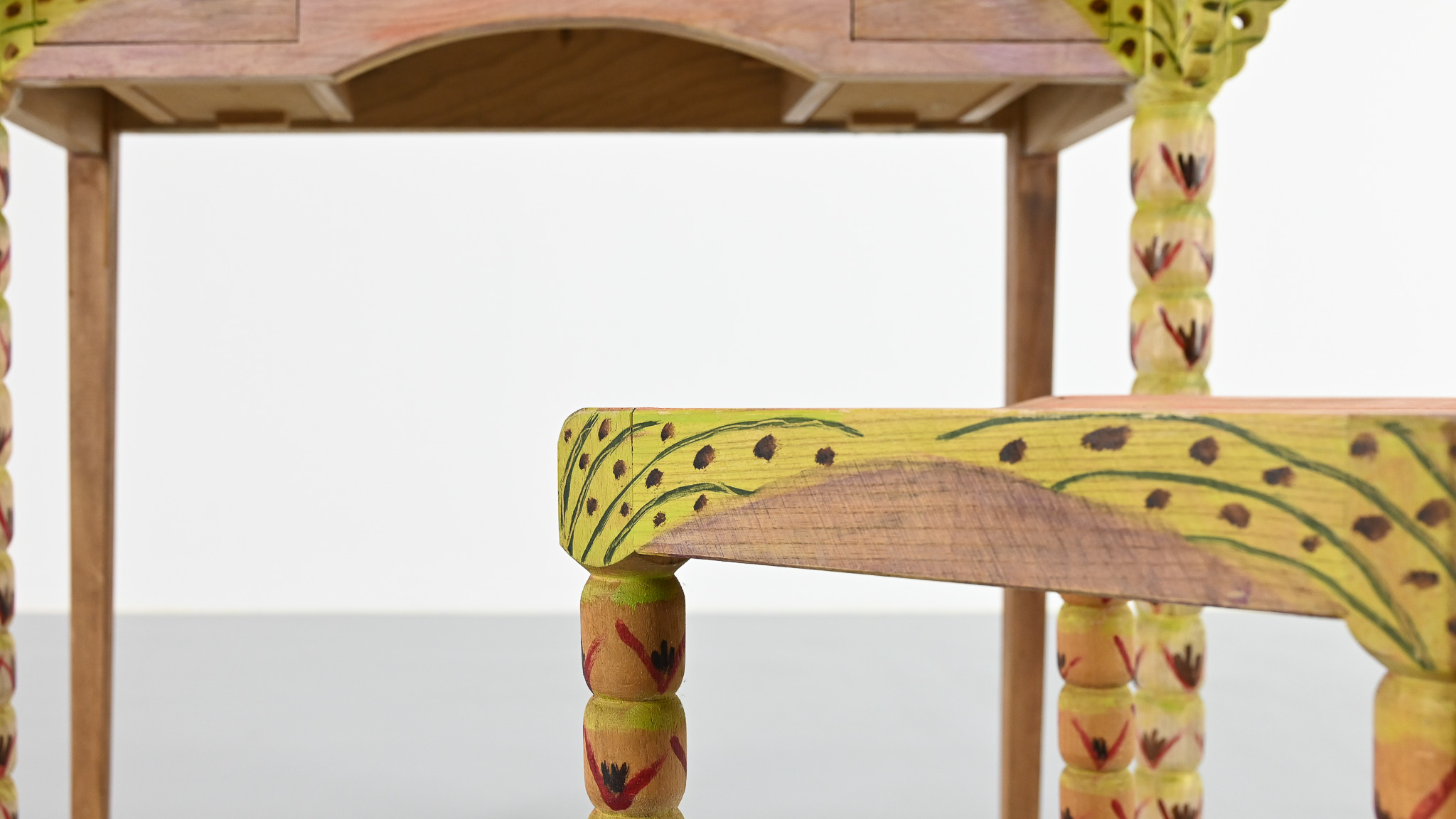
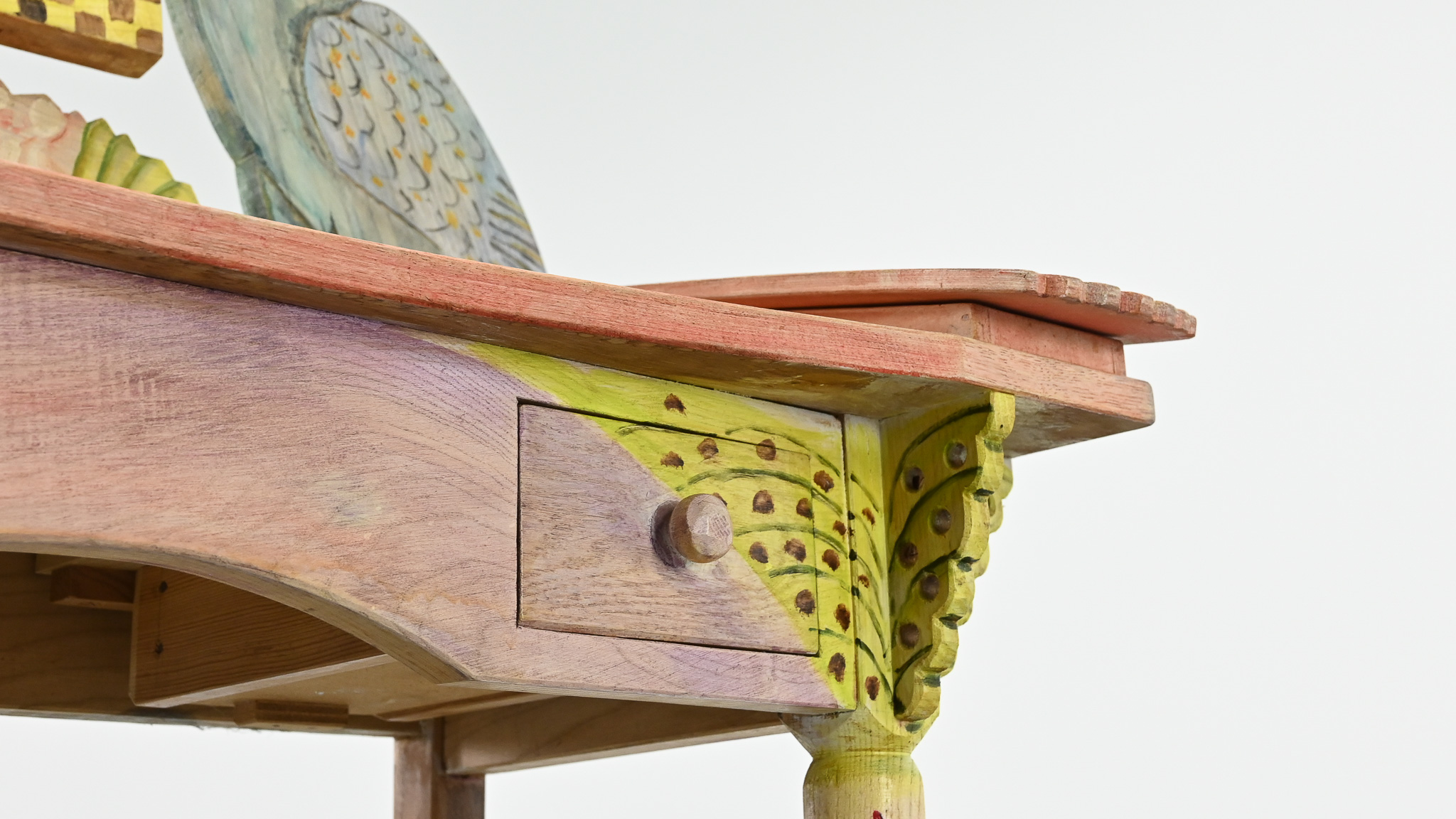
Rigot’s characteristic use of colour — at times naturalistic, always expressive — animates the surface. The pivoting mirror, framed by a checkerboard border still bearing traces of pencil guidelines from its making, appears to float between the birds’ necks. Below, carved and pierced details in bright tones evoke a garden in bloom, while the slender front legs, painted with floral or feather-like motifs, lend the piece lightness and echo the accompanying stool.
The table features two drawers to the front apron and two concealed compartments hidden beneath the peacocks’ tails.
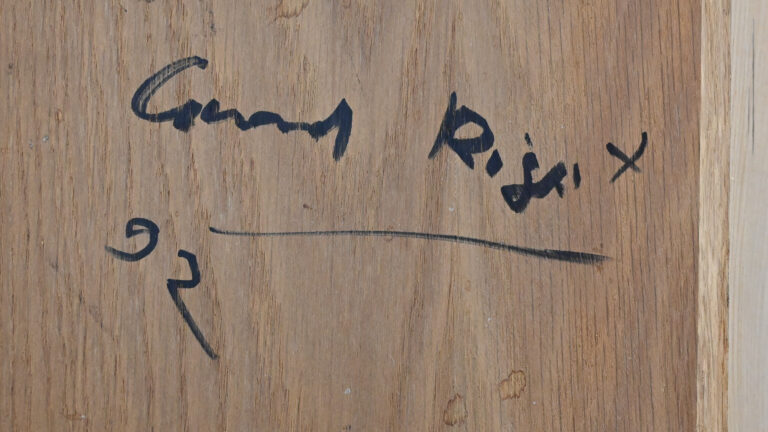
Born in 1929, Rigot began sculpting furniture for himself and his family after leaving Paris for the south-west countryside, where he acquired a carpentry workshop. His zoomorphic creations — pelicans, cats, flamingos, bears — playfully blur the boundary between art and furniture.
By the late 1980s, his work had travelled from Paris to New York, London and Zurich, attracting collectors drawn to its singular character. Yet each piece retains something deeply personal: the visible hand, the freedom of colour, the joy of invention.
Each piece is carefully cleaned and, when necessary, restored with respect for its original conception.
Subtle signs of use and natural patina may remain, as part of its lived history.